Estimated reading time: 1 minute
I visited the Atacama Desert in December 2025 with my husband — every recommendation, road tip, and honest opinion in this guide is based entirely on our firsthand self-drive experience.
The Atacama doesn’t ease you in. It just hits.
Within hours of landing in Calama and driving into San Pedro de Atacama, my skin was already tightening. By the next morning, my lips were chapped, my hands were dry, and I was reaching for moisturizer more times than I could count. The desert doesn’t care that you packed light. It will remind you, repeatedly, that you are a guest in one of the harshest environments on earth.
And yet — I’d go back in a heartbeat.
The Atacama Desert is the kind of place that permanently rewires something in your brain. The landscapes don’t look real. The silence is complete. The sky at night is the most extraordinary thing I have ever seen with my own eyes. And doing it the way we did — renting a car, self-driving, setting our own pace — made it feel entirely our own in a way that a guided tour simply couldn’t have.
This is your complete Atacama Desert travel guide for 2026 — the roads, the spots, the stargazing, the hotel, and everything the older blogs won’t tell you.
Atacama Desert Trip At a Glance
📍 Base: San Pedro de Atacama, Chile 🗓️ When We Visited: December 2025 ⏱️ Time Spent: 4 days 🚗 How We Got Around: Rental car, self-drive 🏨 Where We Stayed: Habitas Atacama 💰 Budget Level: Luxury 🌡️ Weather in December: Intense UV, extreme dryness, cold mornings and nights, warm afternoons ✈️ Nearest Airport: Calama (CJC) — approximately 1 hour drive to San Pedro
Table of contents
- The Atacama doesn’t ease you in. It just hits.
- Why the Atacama Is Unlike Anywhere Else
- Getting There — Flights and the Drive In
- Should You Self-Drive the Atacama?
- Where to Stay — Why We Chose Habitas Atacama
- The Best Things to Do in the Atacama Desert
- Stargazing in the Atacama — DIY vs Resort
- Practical Atacama Travel Tips for 2026
- Final Thoughts — Is the Atacama Worth It?
- Atacama Desert Travel Guide: Your Most Asked Questions (FAQ)
Why the Atacama Is Unlike Anywhere Else
The Atacama Desert is the driest non-polar desert on earth. Some parts of it haven’t seen rain in recorded history. It sits at an average altitude of 2,400 metres, with many of its most iconic sites pushing well above 4,000. The UV index is consistently extreme. The air is so dry it will crack your skin, your lips, and your patience if you’re not prepared.
It is also, without question, one of the most beautiful places I have ever been.
What makes the Atacama special isn’t just one thing — it’s the layering of completely different landscapes within a relatively small area. Salt flats with flamingos. Red rock formations reflected in still lagoons. A valley that looks like the surface of the moon. Geysers erupting at sunrise at 4,300 metres. And above it all, a night sky so clear and so dense with stars that it genuinely stops you mid-sentence.
In 2026, the Atacama is trending as both a coolcation destination — travelers seeking altitude relief from heat — and a wellness haven, with properties like Habitas leading a wave of slow, intentional travel that’s less about ticking boxes and more about actually being somewhere. If you’ve been on the fence about Chile, let this be the post that pushes you.
Getting There — Flights and the Drive In
The gateway to the Atacama is Calama Airport (CJC), which connects through Santiago. We flew from Santiago to Calama on a domestic flight — it’s quick, reliable, and the only sensible option unless you have days to spare for overland travel.
From Calama, San Pedro de Atacama is roughly an hour’s drive. If you’re self-driving like we did, you pick up your rental car at the airport and head straight in. The road is straightforward, well-paved, and gives you your first taste of the desert landscape — vast, flat, and otherworldly even before you’ve officially arrived.
A note on altitude: San Pedro de Atacama sits at approximately 2,400 metres. Most people feel fine here but if you’re planning to visit El Tatio Geysers (4,300m) or the high-altitude lagoons like Miscanti (4,200m), give yourself at least a full day in San Pedro to acclimatize before heading up. Headaches, fatigue, and shortness of breath are common if you rush it. Drink water constantly and avoid alcohol on your first day.
Should You Self-Drive the Atacama?
Most luxury travelers visiting the Atacama book guided tours for everything. We didn’t — and it was one of the best decisions of the trip.
Renting a car gave us complete freedom. We set our own pace, stopped wherever we wanted, and had moments of total solitude at places that guided tour groups rushed through. That said, self-driving the Atacama is not without its challenges and it’s worth being honest about both sides.
The case for self-driving:
- Complete flexibility on timing — crucial for catching sunrise at geysers or golden hour at Valle de la Luna
- Solitude at popular spots when you arrive slightly off-schedule from tour groups
- The road trip itself becomes part of the experience — driving through the desert with nothing but open landscape in every direction is something you don’t get on a minibus
The honest challenges:
- Many roads are unpaved, dusty, and require careful navigation — a 4×4 or high-clearance vehicle is strongly recommended for spots like Piedras Rojas
- Cell service is unreliable or nonexistent in many areas — download offline maps before you leave San Pedro every single day
- Google Maps will occasionally fail you spectacularly. On the way to Laguna Chaxa, it confidently routed us down a road that turned out to be under construction with no clear endpoint. After 30 minutes of dusty confusion, we pulled up satellite view, identified an alternative route, and eventually found our way. It was chaotic, slightly stressful, and a story we’ll tell forever — but it’s a good reminder to always have a backup navigation plan.
My verdict: Self-driving the Atacama is absolutely worth it, but go in prepared. Offline maps, a capable vehicle, extra water in the car, and a flexible mindset are non-negotiables.
Where to Stay — Why We Chose Habitas Atacama
There are several luxury properties in San Pedro de Atacama — Explora, Tierra, and others have been the classic choices for years. We chose Our Habitas Atacama and it exceeded every expectation.
Habitas is not a traditional hotel. It’s a low-impact, sustainably built desert retreat that feels like it was designed by someone who genuinely loves the Atacama rather than someone who just wanted to build a luxury property in it. The architecture is stunning — open, airy structures that blur the line between inside and outside, with rooms that frame the desert like a living painting.
The food is excellent. The common areas invite you to slow down. And the staff genuinely know the desert — the recommendations we got from Habitas for timing our visits, which roads to take, and what to expect at each site were more useful than anything we’d read online.
In 2026, Habitas has become a flagship example of what the travel industry is calling regenerative travel — tourism that aims to leave a destination better than it found it. Chile is pushing toward 100% eco-certified tourism and properties like Habitas are leading that shift. If sustainable luxury matters to you, this is your place.
👉 Book your Our Habitas Atacama stay here!
Practical note for self-drivers: Habitas has accessible parking for guests with rental cars — worth confirming at booking if you’re self-driving, as some San Pedro properties have limited vehicle access on desert tracks.
(Full Habitas Atacama review coming soon — including room details, food, the stargazing program, and whether it’s worth the price.)
The Best Things to Do in the Atacama Desert
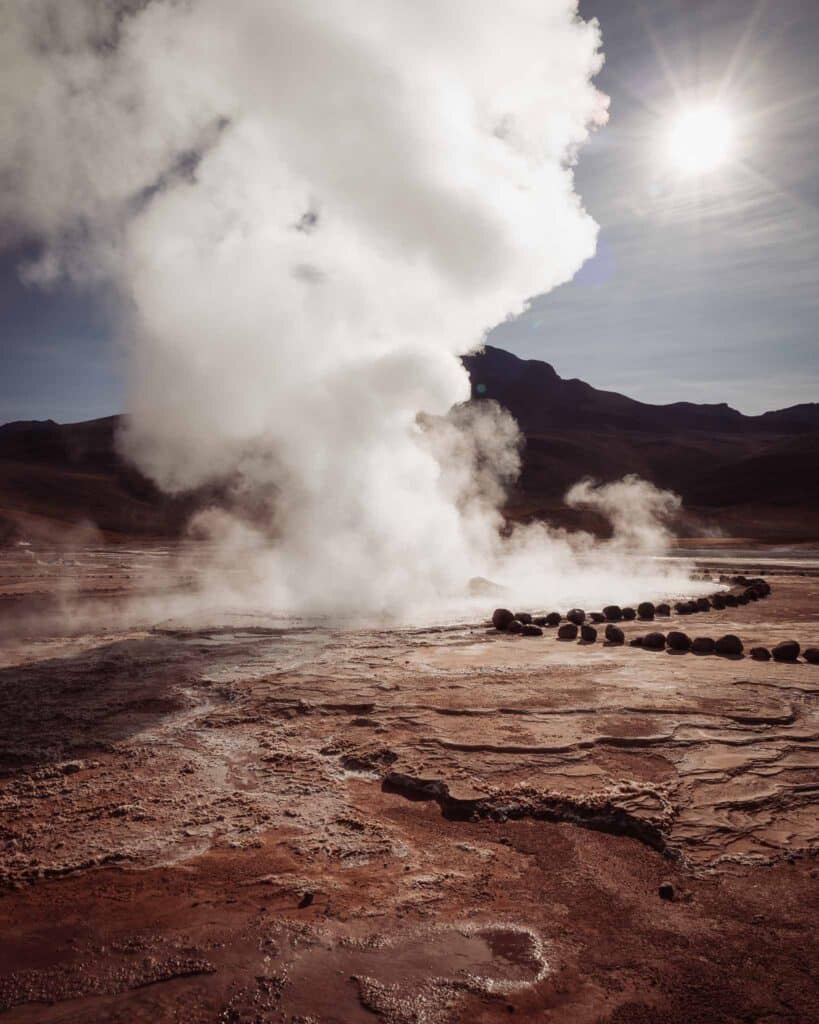
El Tatio Geysers
The alarm goes off at 4am. You will question every decision that led to this moment. And then you arrive.
El Tatio is one of the highest geyser fields in the world, sitting at over 4,300 metres above sea level. Arriving before sunrise means watching columns of steam erupt against a sky that shifts from deep navy to pale gold as the sun climbs — it is one of the most genuinely surreal things I have ever witnessed.
The cold is brutal before sunrise. Layer everything you have. By mid-morning the temperature rises quickly, so you’ll be shedding layers just as fast — but for that first hour, dress like you’re going somewhere far colder than you think you need to.
Can you visit El Tatio without a tour? Yes — and we did. The drive from San Pedro takes roughly 1.5 hours on a mostly unpaved road and requires leaving around 4:00–4:30am to arrive before the geysers peak at sunrise. The road is manageable in a 4×4 but challenging in the dark — drive slowly and carefully. There is an entrance fee payable on arrival. No special permit is required but confirm current entry requirements before you go as these can change seasonally.
This was my single favourite moment of the entire Chile trip. The 4am alarm was worth every second of it.
Valle de la Luna (Valley of the Moon)
If El Tatio is the Atacama’s most dramatic experience, Valle de la Luna is its most otherworldly.
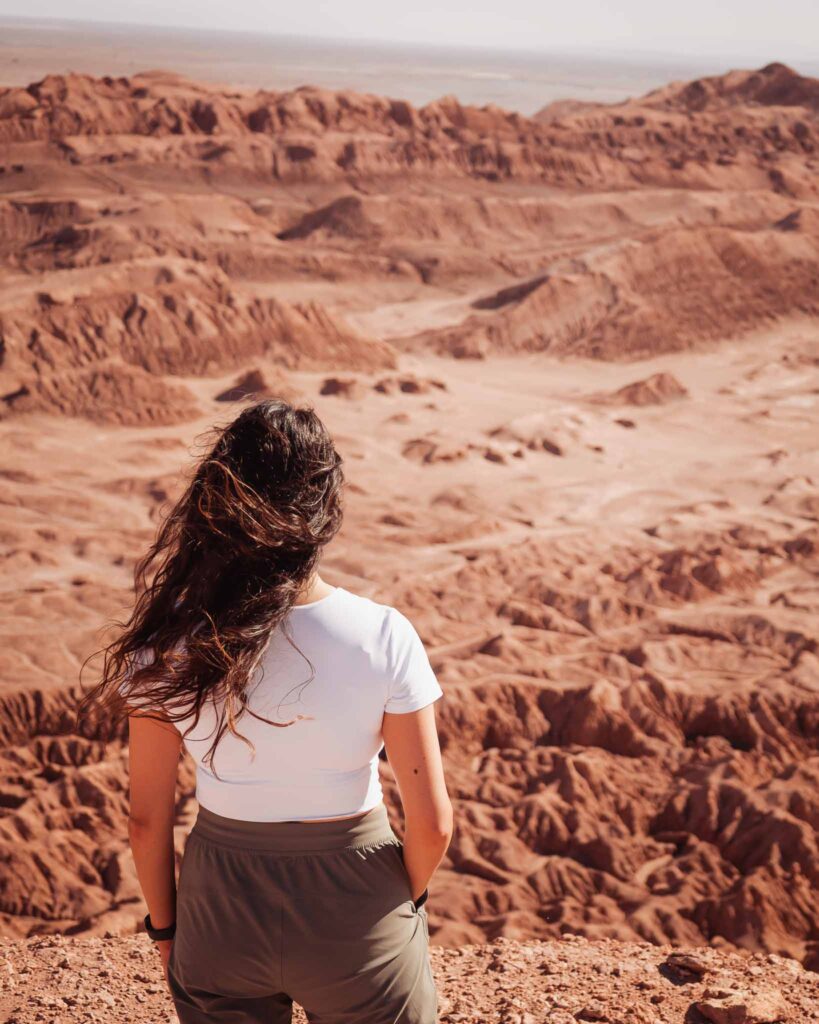
The landscape here defies easy description. Eroded salt and rock formations stretch across a vast valley in shapes that look sculpted by something other than wind and time — grey and white and amber, shifting colour as the light changes through the day. The hills in the surrounding area have a Mars-like quality that genuinely made us stop the car and just stare. It was our “wow, this is unreal” moment of the entire Atacama leg.
We were slightly rushed on our visit and didn’t complete every hike — if you have a full afternoon, give yourself more time than you think you need. We stopped at all the main viewpoints and caught the designated sunset point on the way out, which is included in the entrance price. Even a partial visit here is unforgettable. A full one would be better.
Tip: Visit in the late afternoon to catch the sunset colours on the formations. The light transformation in the final hour before dark is extraordinary.
Piedras Rojas
One of the most photographed spots in the Atacama — and for good reason.
Vivid red rock formations rise above a perfectly still saltwater lagoon, with flamingos wading in the shallows and the high Andean peaks behind. On a clear day the reflections in the water are extraordinary. It looks like a postcard and then you realize you’re actually standing there.
Getting here is part of the adventure. Google Maps confidently sent us down a road that turned out to be under construction with no clear endpoint. After 30 minutes of dusty, slightly panicked confusion, we pulled up satellite view, found an alternative route, and eventually made it. The lost hat to the Atacama wind happened here too — hold onto yours.
A 4×4 is strongly recommended for this road. It is unpaved, rocky in sections, and not something you want to attempt in a standard sedan.
Laguna Chaxa, Lake Miscanti & Miniques
These high-altitude salt lakes are where the flamingos are — and they are worth every dusty kilometre of road to reach them.
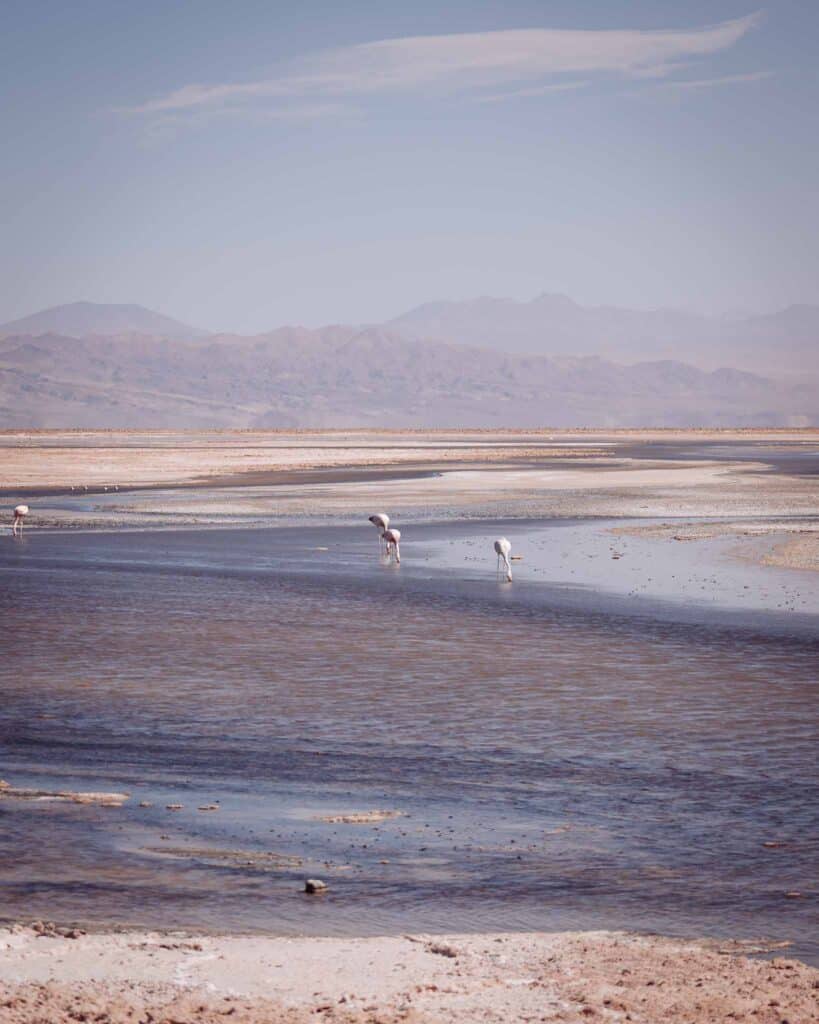
Laguna Chaxa is the most accessible and most visited. It sits within the Los Flamencos National Reserve and is home to three species of flamingo — Chilean, Andean, and James’s. The landscape around it is stark and beautiful, with white salt crust stretching to the horizon.
Important 2026 update: Laguna Chaxa no longer accepts cash payments at the entrance. Entry is now processed digitally — when we arrived, staff directed us to book on our phones at the gate. Make sure you have mobile data before arriving, or connect to WiFi in San Pedro and screenshot the booking confirmation in case you lose signal on the road. Older blogs won’t mention this — don’t get caught out.
Lake Miscanti and Miniques sit higher and feel more remote. The altitude here is significant — above 4,200 metres — so acclimatize properly before visiting. The views are more dramatic and the crowds are thinner. On a clear day with the volcanic peaks reflected in the deep blue water, it is breathtaking.
San Pedro de Atacama Town
After days of vast open landscapes, San Pedro feels almost like a mirage — a small, walkable adobe town with good restaurants, tour operators, craft markets, and a low-key energy that invites you to slow down.
We used it as our daily debrief. Morning coffee before heading out, dinner after coming back from wherever the day took us. The town is small enough to walk entirely and charming enough that wandering with no particular plan is its own kind of pleasant. Don’t overlook it in the rush to see everything outside of it.
Stargazing in the Atacama — DIY vs Resort
The Atacama Desert is one of the best stargazing destinations on the planet. The altitude, the dry air, and the near-total absence of light pollution combine to produce a night sky that is genuinely difficult to describe to someone who hasn’t seen it.
We experienced it both ways — and both were extraordinary in completely different ways.
DIY Stargazing — Night One Our first night in the Atacama, we simply stepped outside Habitas after dinner and looked up. No tour, no telescope, no guide. Just the sky.
It was enough to stop us completely. The Milky Way was visible as a physical band of light across the sky — not a faint suggestion of it, but a dense, textured river of stars. We stood outside for almost an hour saying very little. Some experiences don’t need commentary.
Resort Stargazing — Habitas Session The guided session at Habitas added an entirely different layer. Our guide walked us through constellations, planets, and deep sky objects with real context and storytelling. Habitas uses newer telescope equipment with interchangeable lenses for different segments of the session — switching between wide-field views of star clusters and higher-magnification views of planets. In 2026, many Atacama stargazing tours have upgraded to smart telescope technology that allows you to see color nebulae rendered on your phone alongside the live view — a remarkable combination of old and new.
Our verdict: Do both if you can. The DIY experience gives you something raw and private. The guided session gives you understanding. Together they make the Atacama night sky something you’ll carry with you for a long time.
Planning note: Book resort or external stargazing tours in advance, especially around new moon phases when demand peaks. Sessions fill quickly and the best sky conditions are tied to the lunar calendar — your resort can advise on optimal nights during your stay.
👉 Book your Stargazing in ATACAMA tour here!
Looking ahead: A partial lunar eclipse will be visible from the Atacama region on August 28, 2026 — a genuinely special window for anyone planning a trip this year. And if the Atacama has you dreaming of coming back, a partial solar eclipse will be visible from the region on February 6, 2027 — worth putting on your radar now.
Practical Atacama Travel Tips for 2026
Altitude Acclimatization Spend at least one full day in San Pedro de Atacama (2,400m) before visiting high-altitude sites like El Tatio (4,300m) or Lake Miscanti (4,200m). Symptoms of altitude sickness include headaches, fatigue, nausea, and shortness of breath. Drink water constantly, avoid alcohol on arrival day, and ascend gradually.
What to Pack — Non-Negotiables
- Heavy-duty sunscreen — SPF 50 minimum, reapply constantly
- Rich moisturizer and lip balm — the dryness is genuinely extreme
- Layered clothing — mornings and nights are cold, afternoons are warm
- A hat with a chin strap — the wind is real and it will take a regular hat without warning
- Offline maps downloaded before leaving San Pedro each day
- Extra water in the car at all times
Driving Conditions Many roads to Atacama’s most iconic sites are unpaved and require a 4×4 or high-clearance vehicle. Road conditions can change — especially after rare rain events. Download satellite maps, not just road maps, so you can identify alternative routes if needed. Cell service is unreliable across large sections of the desert.
Skin and Health The UV intensity at Atacama’s altitude is significantly higher than at sea level. Sunburn happens faster than you expect even on overcast days. My skin was visibly chapped within hours of arriving despite moisturizing regularly — pack more skincare products than you think you need and start applying before you even land.
Best Time to Visit The Atacama is accessible year-round but December through March brings slightly more precipitation (still minimal by any standard) and warmer afternoons. We visited in December and found it ideal — clear skies, manageable temperatures, and excellent stargazing conditions. October and November offer slightly cooler weather with equally good visibility.
Read More Articles!
Final Thoughts — Is the Atacama Worth It?
Without any hesitation: yes.
The Atacama is one of those rare destinations that delivers more than the photographs suggest — and the photographs are already extraordinary. It is harsh and beautiful and humbling in equal measure. It will crack your skin and test your navigation skills and wake you up at 4am and make you stand outside in the cold staring at a sky full of stars with nothing useful to say.
That is exactly the point.
Whether you self-drive or join guided tours, stay at Habitas or another property, stargaze alone or with a guide — the Atacama will give you something. Go prepared, go curious, and give it more than a day if you possibly can.
We gave it four days and it still felt too short.
Let’s Chat!
Have you been to the Atacama or is it on your list? Are you a self-driver or do you prefer guided tours? And honestly — would you do the 4am geyser alarm? Drop a comment below, I’d love to hear from you! If this guide helped you, save it for your trip planning and share it with someone who needs a little desert in their life. 🌵
Atacama Desert Travel Guide: Your Most Asked Questions (FAQ)
Yes, with the right preparation. A 4×4 or high-clearance vehicle is strongly recommended — some roads to key sites like Piedras Rojas are unpaved and rocky. Download offline maps before leaving San Pedro each day as cell service is unreliable across large areas of the desert. Google Maps can also route you incorrectly on construction roads — we learned this the hard way on the way to Laguna Chaxa. Go prepared with satellite maps as a backup and you’ll be completely fine.
Give yourself at least one full day in San Pedro de Atacama (2,400m) before visiting high-altitude sites. El Tatio Geysers sit at 4,300m and the high lagoons like Miscanti are above 4,200m — that’s a significant jump. Drink water constantly, avoid alcohol on your first day, ascend gradually, and listen to your body. Mild headaches are common and usually pass with rest and hydration.
Yes — especially around new moon phases when the sky is darkest and demand peaks highest. Sessions at quality operators and resort programs like Habitas fill up quickly. Book before you arrive rather than hoping for availability on the night.
We stayed at Our Habitas Atacama and it was exceptional — stunning desert architecture, excellent food, genuine sustainability credentials, and a stargazing program that was one of the highlights of our entire Chile trip. It represents a newer wave of regenerative luxury travel that sets it apart from older classic properties in the area. Full review coming soon on the blog.
Yes — we did exactly this. Leave San Pedro around 5:30–6:00am to arrive before sunrise when the geysers are most active. The drive is approximately 1.5 hours on mostly unpaved road — take it slowly in the dark and use a 4×4. There is an entrance fee payable on arrival. The experience of arriving independently and having the geysers to yourself before the tour groups arrive is genuinely special.
The non-negotiables are SPF 50+ sunscreen, heavy-duty moisturizer, lip balm, layered clothing for cold mornings and warm afternoons, a hat with a chin strap, offline maps, and extra water in your car at all times. The UV intensity at altitude is extreme and the dryness will affect your skin faster than you expect — don’t underpack on skincare.
Absolutely worth it — the flamingo colonies and salt flat landscapes are stunning. As of 2026, Laguna Chaxa no longer accepts cash at the entrance. Entry is processed digitally on your phone at the gate or before hand, so make sure you have mobile data or download the booking page on WiFi in San Pedro before heading out. A 4×4 is recommended for the road in.