Estimated reading time: 15 minutes
I road-tripped through Chilean Patagonia in December with my husband — every restaurant, road tip, and honest opinion in this guide is based entirely on our firsthand self-drive experience.
They call Patagonia the end of the world. But standing there, watching granite towers rise out of a sky that looks too dramatic to be real, it felt less like an ending and more like the beginning of something much wilder.
We landed in Punta Arenas, picked up a rental car, and spent a week driving through some of the most intense winds either of us had ever experienced. Through penguin colonies and empty highways and a waterfall that shook the ground beneath us and a park that made us feel genuinely, wonderfully small.
Was the hype real? Completely. Every kilometre of it.
This is your complete guide to Chilean Patagonia — the road trip, the towns, the wildlife, the park, and everything you need to know before you go.
Patagonia Road Trip — At a Glance
📍 Regions Covered: Punta Arenas → Puerto Natales → Torres del Paine 🚗 Getting Around: Rental car, self-drive 📅 When We Visited: December 2025 ⏱️ Time Spent: 6 days 🏨 Where We Stayed: Hotel Costaustralis, Puerto Natales 💰 Budget Level: Mid to Luxury 🌡️ Weather in December: Cool, intensely windy, dramatic ✈️ Nearest Airport: Punta Arenas (PUQ) 🗺️ Total Drive: Punta Arenas to Puerto Natales — approximately 250km on Route 9
Table of contents
- Why Patagonia Belongs on Your Chile Itinerary
- Getting There — Flying into Punta Arenas
- Punta Arenas — The Southernmost City in Chile
- Isla Magdalena — The Penguin Colony You Won’t Forget
- The Drive to Puerto Natales
- Puerto Natales — Your Patagonia Base Camp
- Torres del Paine National Park — The Main Event
- Wildlife in Patagonia — What We Saw (and Didn’t)
- The Legend of the Statue
- Practical Patagonia Travel Tips
- Final Thoughts — Is Patagonia Worth the Journey?
- Patagonia Chile Travel Guide: Your Most Asked Questions (FAQ)
Why Patagonia Belongs on Your Chile Itinerary
Most people put Torres del Paine on their list and treat everything else in Patagonia as logistics. That’s a mistake.
Chilean Patagonia is a region, not just a park. It’s the southernmost city in Chile with its windswept waterfront and surprising food scene. A two-hour boat ride across the Strait of Magellan to sit among thousands of penguins going about their lives completely unbothered by your presence. It’s 250 kilometres of open road where the crosswinds physically push your car sideways and the landscape stretches to every horizon with nothing in between. And it’s a small waterfront town that shows up completely unexpectedly and makes you wish you’d booked an extra night.
Torres del Paine is the headline. But Patagonia is the whole story.
Getting There — Flying into Punta Arenas
The gateway to Chilean Patagonia is Punta Arenas Airport (PUQ), which connects through Santiago on domestic flights. If you’re doing the full Chile itinerary — Santiago, Atacama, then Patagonia — you’ll fly back through Santiago before connecting south.
The flight from Santiago to Punta Arenas takes roughly three hours and the approach alone is worth the window seat — endless steppe, the Strait of Magellan, and the city sitting at the very bottom of the continent.
Pick up your rental car at the airport. You’ll need it immediately and you’ll use it for everything.
Punta Arenas — The Southernmost City in Chile
Punta Arenas doesn’t announce itself dramatically. It sits quietly on the Strait of Magellan, a port city that has been at the bottom of the world long enough to stop being surprised by it. And then the wind hits you the moment you step outside and you understand immediately that this place operates on entirely different terms.
The wind in Punta Arenas is not a metaphor. It is a physical, relentless, occasionally hilarious force of nature. We watched it take hats, rattle car doors, and reduce walking in a straight line to a genuine challenge. It is also, somehow, part of what makes this place so compelling.
What We Did in Punta Arenas:
Mirador Cerro de la Cruz Our first stop after settling in — a short drive up to the mirador for panoramic views over the city and the Strait of Magellan below. It’s the kind of view that immediately calibrates your sense of where you are. The wind up here was intense enough to make standing still an effort. Worth every gust.
Fuerte Bulnes About 60 kilometres south of the city sits this reconstructed 19th century fort — one of the first Chilean settlements in the region and a reminder of just how isolated and exposed this part of the world really is. The drive down is scenic and the fort itself is well worth an hour. The wind at Bulnes was strong enough to make walking genuinely difficult, which felt oddly appropriate for a fort at the literal end of the earth.
Where to Eat in Punta Arenas:
Be Happy Café — Our first morning fuel stop and an immediate favourite. It’s bright, inclusive, and exactly the kind of cozy spot you want before a big day of exploring. Great coffee, great vibe. If you’re starting your Patagonia road trip from Punta Arenas, start your first morning here.
La Marmita — For dinner, this is the one. A local favourite for cozy Patagonian comfort food — eclectic, warm, and exactly what you want when the Antarctic winds are howling outside. We left full, happy, and completely sold on Patagonian cooking.
Restaurante La Yegua Loca — Perched on a hill with views of the water, we stopped here for lunch after returning from the penguin colony. Sitting on that terrace with the Strait of Magellan below was the perfect way to decompress after the morning on the boat.
Isla Magdalena — The Penguin Colony You Won’t Forget
On our second morning in Punta Arenas we were up early for the boat to Isla Magdalena — and it became one of the most quietly extraordinary experiences of the entire Chile trip.
The crossing takes roughly two hours across the Strait of Magellan. The water is dramatic, the sky is enormous, and you spend the journey watching the island grow slowly larger on the horizon. And then you arrive.
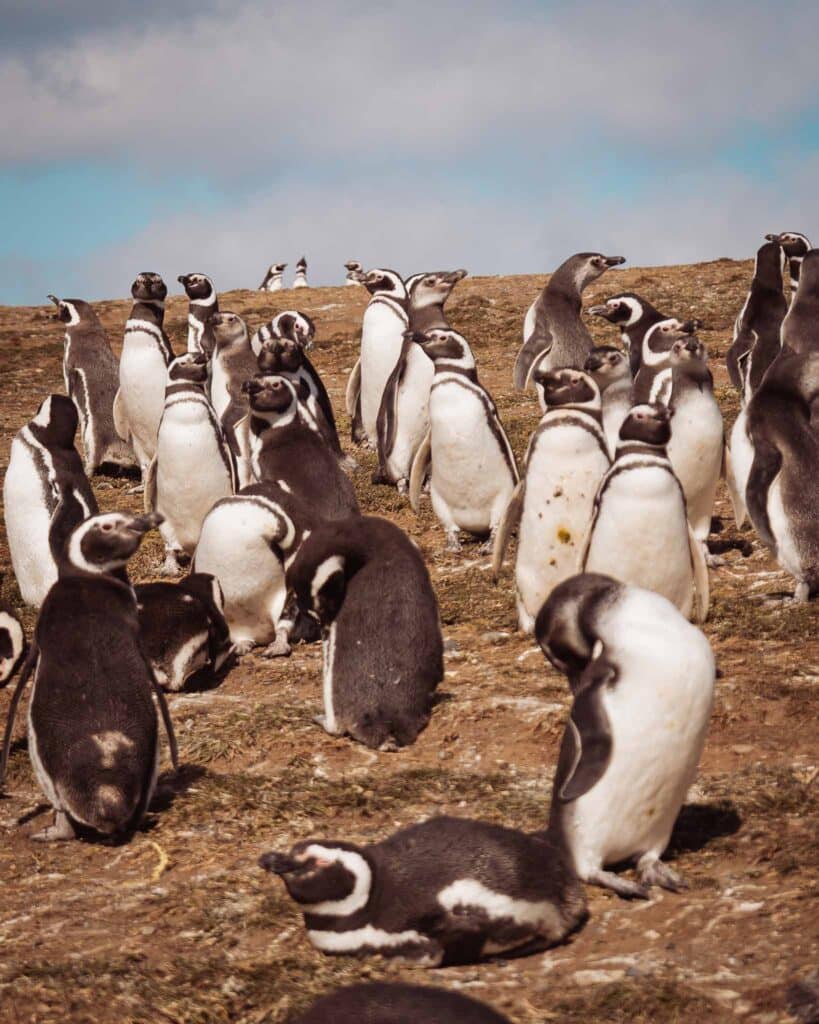
Isla Magdalena is home to one of the largest Magellanic penguin colonies in South America. Thousands of penguins, completely unbothered by human visitors, going about their lives a metre or two from where you’re standing. Waddling to their burrows. Calling to each other. Ignoring you entirely with the casual confidence of animals that have never needed to be afraid of anything.
We’d been rushing — geysers and salt flats and viewpoints and early mornings — and then suddenly we were just sitting there among them, and everything slowed down completely. It was peaceful in a way that felt almost medicinal.
The boat ride back was the moment I’ll remember longest. Sitting on the deck watching Isla Magdalena shrink in the distance, the colony disappearing back into the landscape, the Strait of Magellan stretching out around us. A total mental reset before the long drive ahead.
Booking tip: Isla Magdalena penguin tours depart from Prat Pier in Punta Arenas. In December — peak season — these tours sell out months in advance. Book before you leave home, not when you arrive.
Conservation note: Walking paths on the island are sometimes restricted to protect penguin burrows during peak nesting season. Respect the boundaries — the colony’s health depends on it.
This tour was hands down the best one from our trip.
The Drive to Puerto Natales
The drive north from Punta Arenas to Puerto Natales covers roughly 250 kilometres on Route 9 — and it is one of the most atmospheric road trips we’ve ever done.
The roads are paved and in good condition. The crosswinds, however, are not. In certain sections it genuinely felt like the car was being physically pushed sideways. Both hands on the wheel at all times is not a suggestion — it’s a requirement. Opening a car door in full Patagonian wind requires commitment and ideally a second person to hold it.
The landscape along the way is vast, open steppe that stretches to every horizon with almost nothing between you and the sky. We stopped along the End of the Earth Road — a stretch that earns its name completely. Pull over. Turn the engine off. Stand in that wind and just take it in for a moment. It’s the kind of place that makes you feel very small and very alive simultaneously.
Driving tip: A standard SUV handles the main Route 9 between Punta Arenas and Puerto Natales comfortably. For the gravel sections around Torres del Paine, a 4×4 or high-clearance vehicle is strongly recommended. The wind alone warrants a solid, heavier vehicle throughout.
Puerto Natales — Your Patagonia Base Camp
Puerto Natales surprised us completely. We arrived expecting a functional base town — somewhere to sleep between drives — and found instead a genuinely charming small city with a waterfront that stops you in your tracks and a food scene that punches well above its size.
Give Puerto Natales two nights minimum. One night isn’t enough.
Where We Stayed:
Hotel Costaustralis sits right on the waterfront and the views from the hotel are spectacular — the fjords, the water, the mountains behind. The room itself was comfortable without being exceptional, but the location and the views more than compensate. Waking up to that waterfront in the morning before a day in Torres del Paine is exactly the right kind of motivation.
Where to Eat in Puerto Natales:
La Guanaca — Our first night dinner and immediately one of the best meals of the trip. Incredible food, great atmosphere, exactly what you need after a long drive through Patagonian wind. Don’t skip this one.
Santolla — Built inside recycled shipping containers, this place has a design and energy unlike anything else in town. The king crab here is legendary — order it. The cocktails are equally worth your time. Our second night dinner and easily one of the most memorable meals of the entire Chile trip.
Kau Lodge Café — Right on the water with views of the fjords. The coffee is decent, the view is unbeatable. Our last morning stop before heading back — sit by the window and take your time.
Viejo Lobo — A local favourite for street food. The hot dogs here are a Puerto Natales institution — quick, delicious, and a great way to eat like a local between bigger meals.
Pueblo Artesanal — Even if you don’t buy anything, spend some time here. Local handmade crafts, a beautiful space, and a genuine feel for the culture and craftsmanship of the region.
Torres del Paine National Park — The Main Event
And then the moment everything changes.
We entered Torres del Paine through Laguna Amarga and got extraordinarily lucky — the towers were perfectly clear from the moment we arrived. In December the weather is famously unpredictable and many visitors come and see nothing but cloud. We saw everything. Every peak, every ridge, every impossible granite tower rising into a blue sky that looked almost artificially perfect.
I’m aware that not everyone gets this. That some people come all this way and the clouds never break. That makes me genuinely grateful for what we saw and honest about the fact that luck plays a real role here.
Our Circuit — Stop by Stop:
Laguna Amarga & Mirador The entry point to the park and already beautiful. The lagoon sits in the shadow of the towers with the Andes reflected in the water. It’s the kind of view that makes you pull over before you’ve even properly started.
Salto Grande A powerful waterfall connecting Lago Nordenskjöld and Lago Pehoé — the sound and force of it is impressive even before you see it. The spray reaches you well before you reach the viewpoint. A short walk from the parking area and completely worth it.
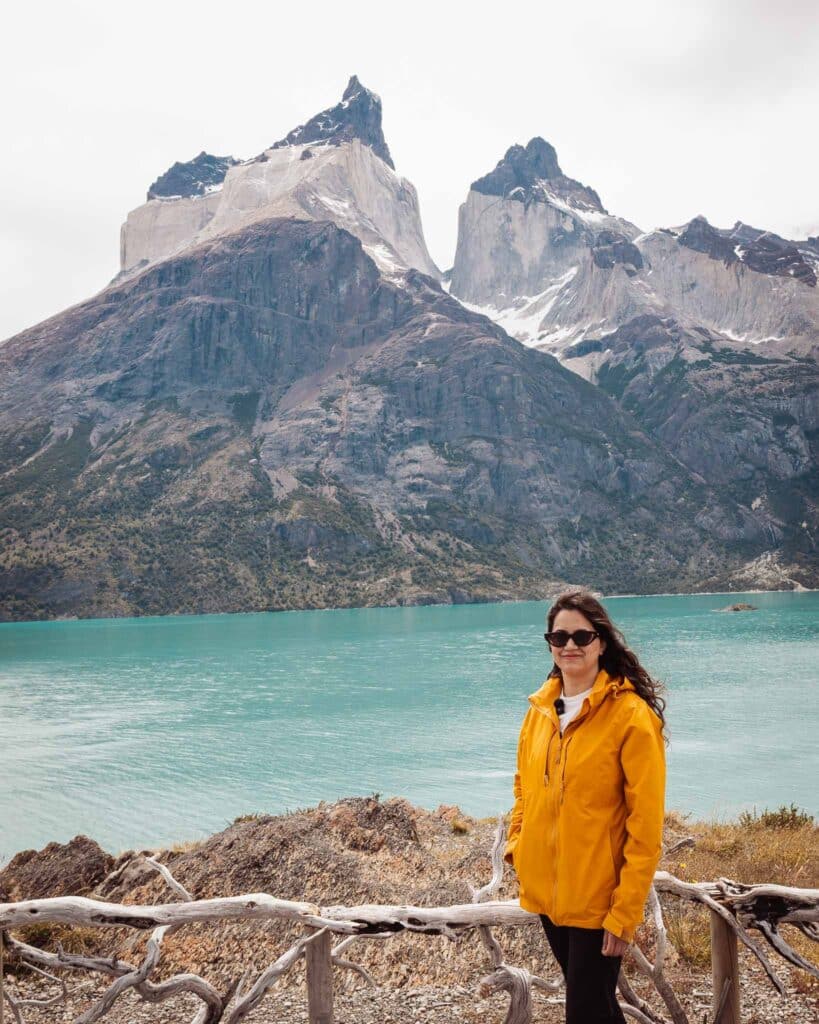
Mirador Cuernos This is the hike we’re most glad we did. The circuit to Mirador Cuernos is challenging enough to feel earned and short enough to complete comfortably within a day circuit — delivering views of the Cuernos (Horns) peaks that rank among the best in the entire park. If you’re self-driving Torres del Paine and don’t have time for the full W-Trek or multi-day circuit, this hike gives you the most extraordinary views for your effort. Moderate fitness required, proper footwear essential.
Hotel Lake Pehoe Worth stopping for even if you’re not staying. The hotel sits on a small island in the middle of Lago Pehoé with the towers rising behind it — it’s one of the most photographed views in all of Patagonia and in person it’s even better than the photos. We stopped, stood there for a while, and then kept driving slightly stunned.
Lago Grey We walked about ten minutes along the grey sand beach and came across a nearly fully melted iceberg floating in the steel-blue water. It was a strangely moving moment — beautiful and quietly sobering at the same time, a reminder of what’s happening to these glaciers. The beach itself is otherworldly, the colour of the water unlike anything else in the park.
Critical 2026 Logistics — Read This Before You Go
Torres del Paine operates a fully digital entry system through pasesparques.cl. You cannot buy tickets at the gate in cash. Book your entry online before you leave Puerto Natales — ideally before you leave home — as peak season slots fill quickly. Download your ticket confirmation before you lose cell service approaching the park boundary. [Entry fee: [add current price from pasesparques.cl before publishing]]
Wildlife in Patagonia — What We Saw (and Didn’t)
Patagonia’s wildlife is one of its genuine surprises. We shared the roads and trails with far more animals than we expected.
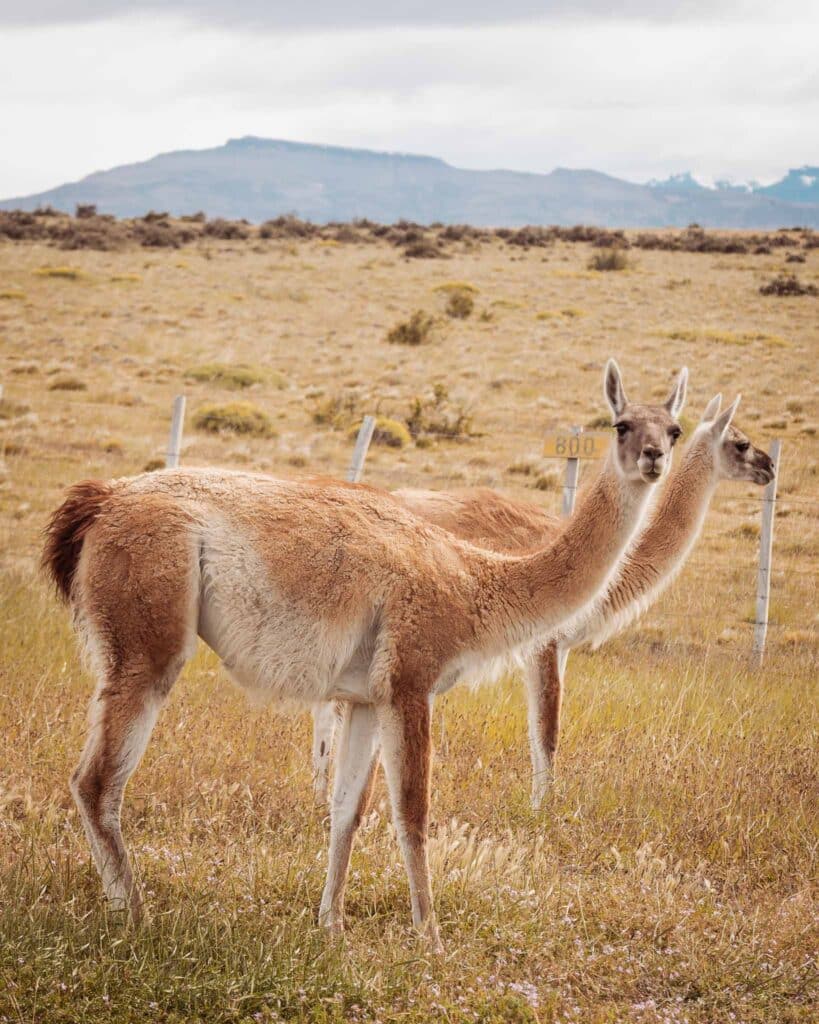
Guanacos were our most constant companions — elegant, unbothered, and apparently completely unaware that roads are primarily for cars. We stopped for them more times than we could count and never once minded.
The Culpeo Fox — On the drive through the park we spotted what I was briefly convinced was a hyena. It was not a hyena. It was a Zorro Culpeo — a Patagonian fox with long legs, a bushy tail, and the kind of dramatic proportions that make perfect sense for this landscape. The locals set me straight with some amusement. It was a genuinely beautiful sighting regardless of my initial misidentification.
Flamingos appeared at the lagoons — a surreal contrast to the grey and brown steppe surrounding them.
The Puma — We did not see a puma. We wanted to see a puma. We looked for a puma at every stop. No puma. The best spots for puma sightings in the park are reportedly around Salto Grande and Laguna Amarga in the early morning or late afternoon — something to know and plan around if a puma sighting is on your list. It’s now firmly on ours for next time.
The Legend of the Statue
Before we left Punta Arenas for our flight home we made one final stop at the Plaza de Armas.
There is a legend here that every Patagonia traveler should know. On the central monument stands a bronze statue — and if you touch or kiss the foot of that statue, it is said to guarantee that you will return to Patagonia one day.
After a week of driving through that wind, sleeping under those mountains, watching those towers appear through the clouds, and sitting on a boat surrounded by thousands of penguins — I was not leaving without making that promise.
I touched the foot. I’ll be back.
Practical Patagonia Travel Tips
Driving in Patagonia Route 9 between Punta Arenas and Puerto Natales is paved and manageable in a standard SUV. The roads around Torres del Paine include gravel sections where a 4×4 is strongly recommended. Crosswinds throughout the region are intense — both hands on the wheel, always. Opening car doors carelessly in Patagonian wind is genuinely risky for the door and anyone nearby.
Wind — Take It Seriously This cannot be overstated. Patagonian wind is a physical force that will affect everything — driving, hiking, photography, casual walking. Windproof layers are non-negotiable. A hat with a chin strap is essential. Secure anything loose before stepping outside.
Torres del Paine Entry Book through pasesparques.cl before arriving. The park is fully cashless for entry in 2026. Download your confirmation before losing cell service on the approach road.
Weather and Visibility December through February is peak season with the best overall conditions but no visibility guarantees for the towers. We were lucky — many visitors aren’t. Build flexibility into your schedule if possible and don’t plan Torres del Paine as a single non-negotiable day with a tight departure after.
Best Time to Visit October through March is the Patagonian summer season. November and March offer shoulder season conditions — fewer crowds, slightly unpredictable weather, still generally good visibility. December and January are peak crowd months but peak weather months too.
Packing Essentials
- Windproof and waterproof outer layer — this is the single most important item
- Warm mid-layers — temperatures drop quickly when the wind picks up
- Hiking boots with ankle support for park trails
- Hat with chin strap
- Sunscreen — UV is strong even on cool overcast days
- Offline maps downloaded before leaving Puerto Natales
Read More Articles!
Final Thoughts — Is Patagonia Worth the Journey?
There’s a reason people describe Patagonia the way they do. There’s a reason the word keeps appearing in travel bucket lists and trip reports and conversations with strangers who visited once and never quite got over it.
It’s not one thing. It’s the penguins and the granite towers and the king crab in a shipping container restaurant and the wind that never stops and the empty road stretching ahead and the fox that isn’t a hyena and the statue foot you touch before you leave because you already know you’re coming back.
Twelve days in Chile, and Patagonia was the peak of the adventure. The wind will test your patience. The driving requires focus and respect. And there is genuinely nowhere else on earth like it.
Touch the foot. Make the promise. Come back.
Let’s Chat!
Have you been to Patagonia or is it on your list? Are you a Torres del Paine hiker or more of a road tripper like us? And would you touch the foot of the statue? Drop a comment below — I’d love to hear from you. Save this guide for your trip planning and share it with someone who needs Patagonia in their life. 🌿
Patagonia Chile Travel Guide: Your Most Asked Questions (FAQ)
Yes — and we did exactly this. Entering through Laguna Amarga and driving the circuit west to Lago Grey covers the park’s most iconic stops in a full day. The key is an early start from Puerto Natales, a flexible pace, and realistic expectations about hiking time at each stop. For the self-drive day circuit in detail, read our dedicated Torres del Paine guide
For the main Route 9 between Punta Arenas and Puerto Natales, a standard SUV handles the paved road comfortably. For the gravel sections within and around Torres del Paine National Park, a 4×4 or high-clearance vehicle is strongly recommended. The crosswinds throughout the region also make a heavier, more stable vehicle a practical advantage regardless of road surface.
Tours depart from Prat Pier in Punta Arenas. In December — peak nesting season — these tours sell out months in advance. Book online well before your trip rather than hoping for availability on arrival. Check-in is at the pier on the morning of departure.
It’s one of the most well-located — right on the waterfront with views of the fjords and mountains that are genuinely spectacular. The rooms are comfortable and the position makes walking to Puerto Natales’ best restaurants completely effortless after a long day in the park. For a luxury waterfront base, it’s a strong choice.
Torres del Paine entry is managed through pasesparques.cl and must be booked digitally in advance — the park is fully cashless at entry. Book before leaving Puerto Natales and download your confirmation before losing cell service on the approach road.