I am not a nutritionist or registered dietitian. This post reflects my personal wellness habits and lifestyle experience only. Please consult a healthcare professional before making significant changes to your diet.
Somewhere between landing in Lima and eating my third bowl of ceviche in two days, I realized my vegetable intake for that week was approximately zero.
That’s the reality of travel content creation. You’re moving fast, eating whatever is available, convenient or photogenic — and the carefully constructed wellness habits you built at home dissolve somewhere over the Atlantic.
Fibermaxxing isn’t something I discovered in a clinical setting or from a nutritionist’s prescription. I came across it the way most of us find wellness trends in 2026 — scrolling at midnight, half-convinced I was already doing it wrong. And what I found was actually the most accessible nutrition concept I’d encountered in years.
No calorie counting. No macro tracking. No expensive supplements. Just — eat more fiber. Consistently. Imperfectly. In a way that fits around real life.
Here’s my honest, realistic, beginner-friendly guide to what fibermaxxing actually is, why it matters, and how I try to do it without turning it into another thing to feel guilty about.
Fibermaxxing — At a Glance
🌿 What it is: Intentionally prioritizing fiber-rich foods to support gut health, energy and metabolic wellness 🎯 The goal: 25g of fiber daily for women under 50 ⏱️ Difficulty: Low — no tracking required if you use the right approach 💧 The rule: More fiber always means more water ✈️ Travel friendly: Yes — with the right snack strategy 🏆 The mindset: Progress over perfection — always
Table of contents
- What Is Fibermaxxing — And Why Is Everyone Talking About It?
- How Much Fiber Do You Actually Need?
- My “Good Enough” Fiber Routine — The Honest Version
- The Fiber Heroes Worth Knowing
- Easy Fiber Swaps You Won’t Notice
- Fibermaxxing for Travel Days
- The Bloating Question — And How to Avoid It
- Practical Tips
- Final Thoughts — Fibermaxxing Done Realistically
- Fibermaxxing for Beginners: Your Most Asked Questions (FAQ)
What Is Fibermaxxing — And Why Is Everyone Talking About It?
Fibermaxxing is exactly what it sounds like — intentionally maximizing your fiber intake as a daily wellness habit. It’s not a diet, it’s not a cleanse, and it doesn’t require a meal plan or a nutritionist. It’s the 2026 wellness community’s collective realization that most of us are significantly under-eating fiber and that fixing that one thing has a surprisingly broad positive impact.
The conversation around fiber has shifted from something your grandmother talked about to something gut health researchers, metabolic wellness advocates and everyday women are incorporating as a non-negotiable baseline habit. The reason it’s gaining traction now is partly the growing body of research connecting fiber intake to gut microbiome health, stable energy levels, reduced inflammation and better metabolic function — and partly the fact that it’s one of the most accessible nutrition changes you can make without overhauling your entire diet.
In a wellness landscape full of expensive supplements, restrictive protocols and complicated tracking systems — fibermaxxing stands out for being genuinely simple. Eat more plants. Drink more water. Done.
How Much Fiber Do You Actually Need?
The general recommendation for women under 50 is 25 grams of fiber per day. Most North American women currently get somewhere between 10-15 grams daily — meaning most of us are operating at roughly half the recommended amount without realizing it.
To put 25 grams in context:
- 1 cup of raspberries = 8g
- Half a cup of black beans = 7.5g
- 1 medium avocado = 10g
- 1 slice of whole grain bread = 2-3g
- 1 medium apple = 4.5g
Getting to 25 grams is genuinely achievable without dramatic dietary changes — it mostly requires being intentional about including at least one high-fiber food at each meal rather than tracking every gram throughout the day.
If you hit 20 grams on a busy day — that’s a win. Progress over perfection is the whole point of fibermaxxing done realistically.
My “Good Enough” Fiber Routine — The Honest Version
I want to be transparent here: I don’t track my fiber intake in an app. I don’t hit 25 grams every single day. Between travel, content creation deadlines and the general chaos of real life, some days are better than others.
What I do instead is apply what I think of as the Fiber Hero rule — every meal gets at least one food that I know is fiber-rich. Avocado on my toast in the morning. Lentils or chickpeas in my lunch. A handful of berries with whatever I’m having in the afternoon. A generous serve of vegetables with dinner.
I don’t aim for perfection. I aim for consistency — and consistency at 80% is dramatically better than perfection attempted and abandoned.
The 2026 wellness conversation I find most resonant is the shift away from optimizing every variable toward what’s being called metabolic resilience — building sustainable habits that support your energy, gut health and overall function without turning wellness into a second job. Fibermaxxing fits that philosophy perfectly.
The Fiber Heroes Worth Knowing
These are the foods I return to most often because they’re genuinely high in fiber, easy to incorporate, and don’t require complicated preparation:
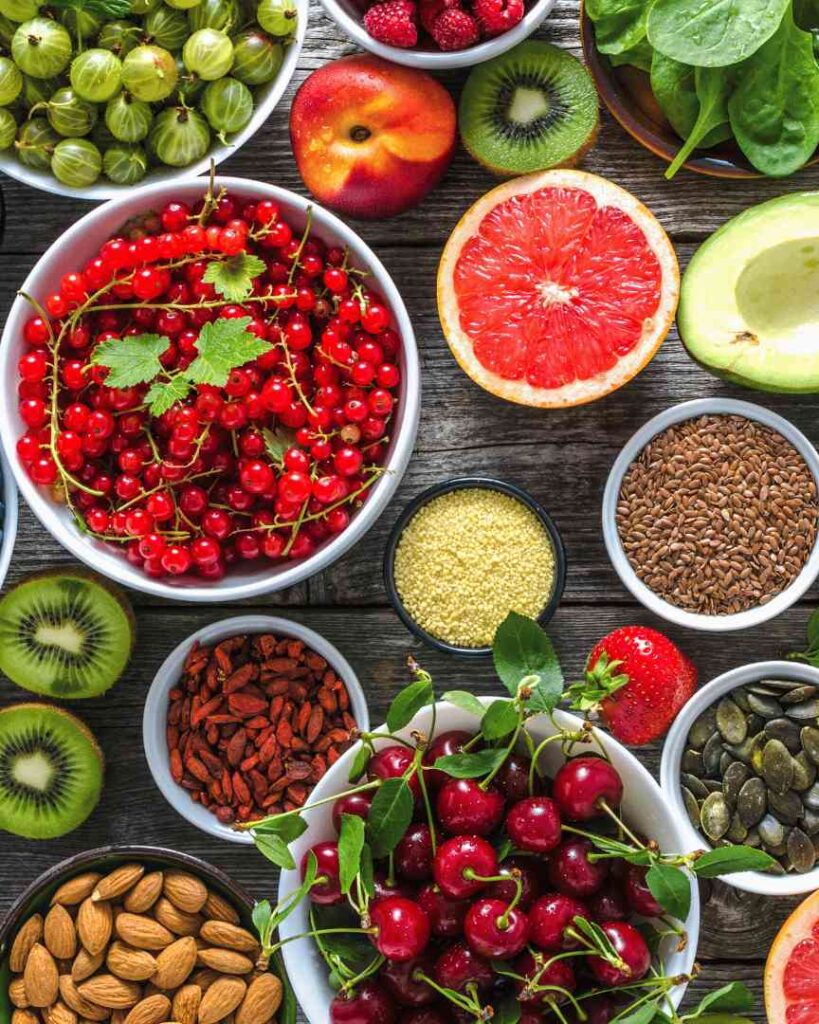
Raspberries and Blackberries Probably my favourite fiber discovery — 8 grams of fiber per cup of raspberries, 7.6 grams per cup of blackberries. They’re also genuinely delicious, work in every context from breakfast to snacking to smoothies, and feel like a treat rather than a health food obligation. A punnet of raspberries in the fridge is my most reliable fiber habit.
Avocado A medium avocado contains around 10 grams of fiber — which makes it one of the most fiber-dense foods you can add to any meal without changing the meal significantly. On toast, in salads, as a side, blended into smoothies. Avocado earns its place in the fibermaxxing toolkit completely.
Lentils and Black Beans Half a cup of either gets you 7-8 grams of fiber with minimal effort. Lentils in soups, black beans in salads, either stirred through grains or used as a base for bowl meals. These are the workhorses of any high-fiber eating approach.
Quinoa and Farro Swapping white rice for quinoa or farro is one of those changes that barely registers in terms of effort but adds meaningful fiber — quinoa delivers around 5 grams per cup cooked, farro around 6. Both have a satisfying texture and work in practically any grain bowl or salad context.
Chia Seeds Two tablespoons of chia seeds adds approximately 10 grams of fiber — and they’re almost invisible when added to yogurt, smoothies, overnight oats or even water. One of the easiest hidden fiber additions available.
Edamame Half a cup of edamame delivers around 4 grams of fiber alongside a solid protein hit. As a snack, a salad topping or a side — edamame is one of the more underrated fibermaxxing staples.
Easy Fiber Swaps You Won’t Notice
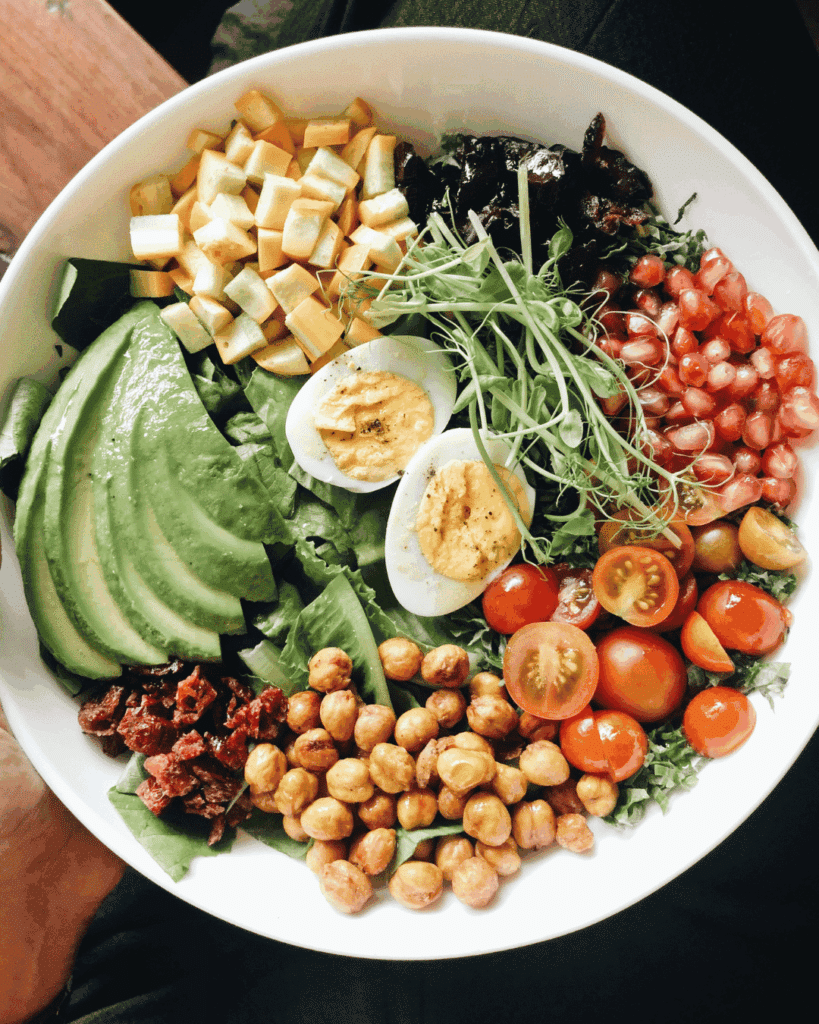
The 75% rule that’s gaining traction in 2026 wellness circles is simple: aim to fill roughly 75% of your plate with fiber-rich foods — vegetables, beans, whole grains — and 25% with protein. No gram counting required. Just a visual check that your plate is mostly plants.
Beyond that, these are the swaps I find easiest to make consistently:
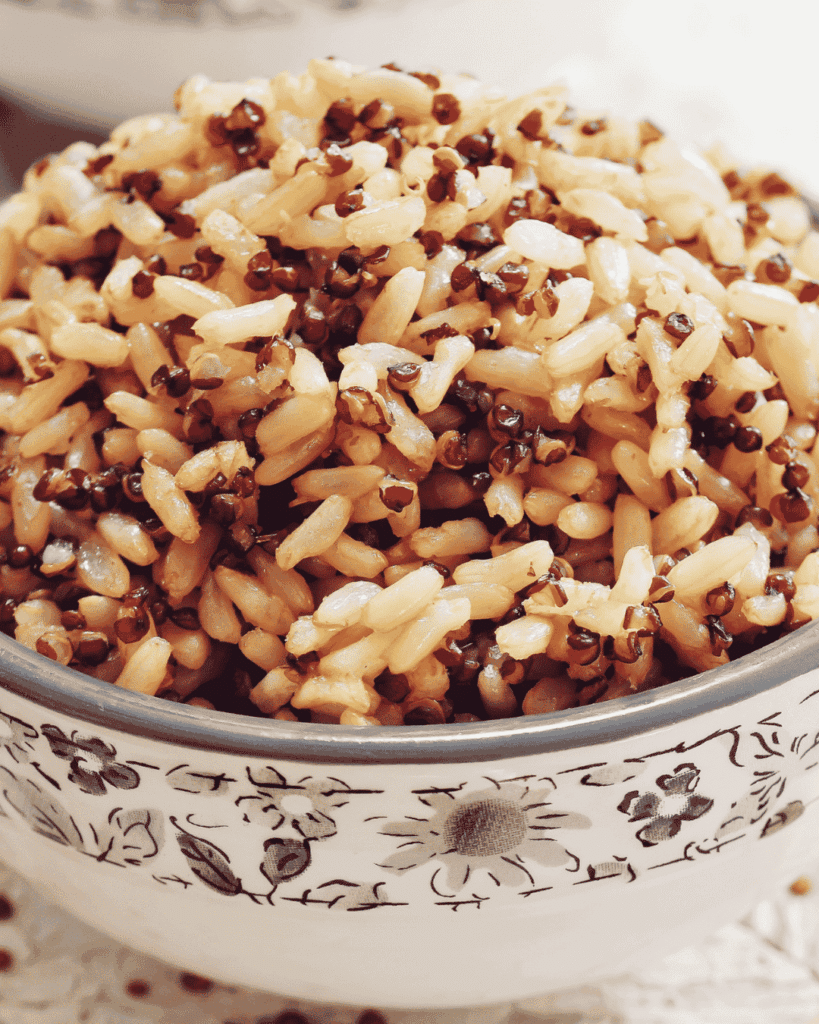
- White rice → Quinoa or Farro — same effort, meaningfully more fiber. Tip: If you like rice, do half rice, half quinoa. Just add fiber instead of eliminating rice
- Regular toast → Whole grain or seeded bread — 2-3x the fiber content
- Chips as a snack → Raw almonds or edamame — more fiber, longer satiety
- Pasta → Legume-based pasta — chickpea or lentil pasta gives you significantly more fiber per serve
- Yogurt alone → Yogurt with chia seeds and berries — turns a low-fiber snack into a genuinely fiber-rich one
None of these feel like deprivation. They’re just slightly better versions of what you’re probably already eating.
Fibermaxxing for Travel Days
This is where it gets harder — and where I’ve had to think most intentionally about maintaining any kind of fiber habit.
Airport food is notoriously low in fiber. The default options are refined carbohydrates, processed snacks and fast food — none of which contribute meaningfully to your daily fiber target.
What I look for at airports:
- Chia puddings — increasingly available at airport grab-and-go kiosks and a genuinely solid fiber source
- Raw almonds or mixed nuts — almost universally available and provide 3-4 grams of fiber per small handful
- Fresh fruit cups — berries when available, apple slices when not
- Hummus and vegetable packs — the most reliably fiber-rich airport snack option when you can find them
What I pack when I’m prepared:
- A small bag of mixed seeds — chia, flax, pumpkin — to add to anything
- A piece of fruit from home
- Individual almond butter packets — fiber plus protein and genuinely filling on a long flight
The honest airport reality is that some travel days the fiber intake is low and that’s okay. One day doesn’t undo consistent habits. The goal is the overall pattern not the individual day.
The Bloating Question — And How to Avoid It
This is the most commonly asked question about increasing fiber intake and it’s worth addressing directly because it’s real and it puts people off before they’ve given fibermaxxing a fair run.
Yes — increasing fiber intake quickly can cause bloating, gas and digestive discomfort. This is because the gut microbiome needs time to adjust to processing more fiber and because fiber draws water into the digestive system.
The solution is simple: go slow and hydrate.
Rather than overhauling your entire diet in one week, add one additional fiber-rich food per day for the first two weeks. Give your gut time to adjust. And drink significantly more water than you think you need — the general guidance is one full glass of water for every high-fiber snack or meal addition.
The bloating is temporary for most people. The benefits — improved gut health, more stable energy, better digestion overall — are not.
Practical Tips
Start with breakfast Morning is the easiest place to build a fiber habit because it’s routine. Overnight oats with chia seeds and berries, avocado toast on whole grain bread, or a smoothie with spinach and frozen raspberries — any of these starts your day with 8-12 grams of fiber before you’ve made a single other decision.
Make berries a non-negotiable Raspberries and blackberries in the fridge at all times. They’re the highest fiber fruit per cup available, they require zero preparation and they work in every context. This is my single most consistent fiber habit.
Soup is your friend A lentil or bean-based soup is one of the easiest ways to get 10-15 grams of fiber in a single meal without thinking too hard about it. Make a batch on Sunday and the week’s lunches are largely sorted.
Read labels on bread Most bread marketed as “healthy” or “multigrain” contains less fiber than you’d expect. Look for at least 3 grams of fiber per slice and whole grain as the first ingredient.
Hydrate consistently Fiber without water doesn’t work as intended. If you’re increasing your fiber intake and not increasing your water intake proportionally, the digestive discomfort will be real. More fiber always means more water — treat them as inseparable habits.
Read More Articles!
Final Thoughts — Fibermaxxing Done Realistically
The reason I find fibermaxxing genuinely useful as a concept — more than most wellness trends that come through — is that it’s flexible enough to fit around real life.
It fits around travel days and non-travel days. Around weeks when meal prep happens and weeks when it doesn’t. Around the ceviche trip and the grab-and-go airport lunch and the home-cooked Sunday soup. It doesn’t require perfection and it doesn’t punish imperfection.
If you hit 25 grams today — great. If you hit 18 grams because it was a chaotic travel day and you found a chia pudding at the airport — that still counts. The habit is the point. Not the number.
Start with one Fiber Hero per meal. Drink more water. Go from there.
Let’s Chat!
Are you already fibermaxxing without knowing it — or is this the nudge you needed to be more intentional about it? Drop a comment below. And if you have a favourite high-fiber food that didn’t make my list — I genuinely want to know. 🌿
Fibermaxxing for Beginners: Your Most Asked Questions (FAQ)
Fibermaxxing is the practice of intentionally prioritizing fiber-rich foods in your daily diet to support gut health, metabolic function and overall wellness. It’s less a formal diet and more a mindset shift — the goal being to consistently hit or approach the recommended 25 grams of daily fiber for women through whole foods rather than supplements or strict tracking.
The general recommendation for women under 50 is 25 grams of fiber per day. Most North American women currently consume around 10-15 grams daily. Getting from wherever you are now to closer to 25 grams doesn’t require a dramatic overhaul — it mostly requires adding one genuinely fiber-rich food to each meal consistently.
It can — particularly if you increase your fiber intake too quickly. The solution is to go slowly, adding one new high-fiber food at a time over several weeks, and to significantly increase your water intake alongside any fiber increase. Fiber draws water into the digestive system to function properly — without adequate hydration the bloating and discomfort are real. The adjustment period is temporary for most people.
The most reliably available options at airports and on travel days are chia puddings, raw almonds or mixed nuts, fresh fruit cups particularly berries, and hummus with vegetable packs. Packing your own snacks when possible — individual almond butter packets, a piece of fruit, a small bag of mixed seeds — gives you more control on longer travel days when airport options are limited.