I explored Cusco in March-April during shoulder season — this guide is based entirely on firsthand experience wandering San Blas, eating my way through the local food scene, and finding the hidden viewpoints most guides miss.
Cusco gets framed almost entirely as the gateway to Machu Picchu. The city you sleep in before the main event. The altitude adjustment stop on the way to something bigger.
That framing does Cusco a serious disservice.
Yes — Cusco is the base for Machu Picchu and Rainbow Mountain. Yes — you’ll spend time here acclimatizing and organizing logistics. But Cusco is also one of the most beautiful, textured, genuinely fascinating cities in South America in its own right. The cobblestoned streets of San Blas, the breakfast cafés overlooking Plaza de Armas, the street food vendors selling Picarones in the afternoon, the local markets where the pricing is honest and the craftsmanship is real — all of this deserves more than the half-day most itineraries give it.
We gave Cusco a full day of proper exploration and it was one of the highlights of the entire Peru trip.
This is your complete Cusco travel guide — the neighbourhood, the food, the hidden spots, the altitude tips, and everything you need to know to actually experience the city rather than just pass through it.
Cusco — At a Glance
📍 Must Visit Neighbourhood: San Blas — cobblestoned, artistic, full of hidden gems ☕ Best Breakfast Spot: Cappuccino Café — Plaza de Armas window patio tables 🍩 Must Eat: Picarones street food — sweet potato doughnuts in syrup 🛍️ Best Shopping: Local Cusco markets — better pricing than Aguas Calientes 🏔️ Altitude: 3,400 metres above sea level — acclimatize before activity 📅 When We Visited: March-April — lush green hills, misty mornings, fewer crowds 🏨 Where We Stayed: Pariwana Hostel Cusco 🦙 Unexpected Highlight: Holding a llama on a Cusco street
Table of contents
- Why Cusco Deserves More Than a Stopover
- Altitude in Cusco — What to Expect and How to Handle It
- The San Blas Neighbourhood — Where to Start
- Breakfast at Cappuccino Café — The Plaza de Armas View
- Wandering Cusco’s Streets — What to Look For
- The Llama Moment
- Where to Eat and Drink in Cusco
- Shopping the Local Markets
- Pariwana Hostel Cusco — What to Expect
- Cusco in March and April — Shoulder Season Advantages
- Practical Cusco Travel Tips
- Final Thoughts — Is Cusco Worth More Than a Logistics Stop?
- Cusco Peru Travel Guide: Your Most Asked Questions (FAQ)
Why Cusco Deserves More Than a Stopover
Cusco was the capital of the Inca Empire — the most powerful civilization in pre-Columbian America — and the city carries that history in its bones. Colonial Spanish architecture sits directly on top of Inca stone foundations. The streets of the San Blas neighbourhood wind up the hillside in patterns laid down centuries before anyone was thinking about tourist itineraries. The Plaza de Armas — the main square — has been the beating heart of the city since the Inca called it Huacaypata.
All of this is present in a single day of wandering if you walk slowly enough to notice it.
In March and April the hills surrounding Cusco are lush and green from the rainy season — dramatic, misty, and genuinely beautiful in a way that the drier months don’t offer. The shoulder season crowds are manageable, the energy of the city is more local than tourist, and the whole place breathes differently than it does in peak season July and August.
Give Cusco a full day. Walk slowly. Eat the street food. Find the hidden viewpoint. It will reward you properly.
Altitude in Cusco — What to Expect and How to Handle It
Cusco sits at 3,400 metres above sea level — significantly higher than Lima at sea level and higher than most North American travelers have experienced before. Altitude sickness is a real consideration and worth taking seriously before you plan your first full day of activity.
What altitude feels like in Cusco: Most travelers notice it within the first few hours — a slight heaviness, some breathlessness on stairs or inclines, mild headache. For most people these symptoms ease within 24-48 hours as the body adjusts. Some travelers feel fine immediately. Others feel it more significantly. Know your body and don’t push it on arrival day.
What genuinely helped us:
Coca leaf candy (Sorojchi pills / candy) — available from vendors around Plaza de Armas in Cusco. Pick some up as soon as you arrive — they are a widely used traditional remedy for altitude sickness and made a noticeable difference for us throughout the Cusco leg of the trip. Do this before you do anything else in the city.
Coca leaf tea — available at most cafés and restaurants throughout Cusco. Order it with breakfast and sip it slowly. It is mild, pleasant, and genuinely useful.
Rest on arrival — the single most effective altitude adjustment tool. If you arrive in Cusco and immediately try to walk San Blas, shop the markets, and eat a big dinner, your body will let you know it disagrees. Give yourself at least half a day of rest before a full day of activity.
Hydration — drink water constantly and avoid alcohol on your first night at altitude. Both matter more than most travelers expect.
Acclimatization order matters: We visited Rainbow Mountain before our full Cusco exploration day — having spent time at 5,200 metres actually made Cusco’s 3,400 feel considerably more manageable on our return. If your itinerary allows it, building in some altitude exposure before your main Cusco day helps.
The San Blas Neighbourhood — Where to Start
San Blas is Cusco’s artisan quarter — a hillside neighbourhood of narrow cobblestoned streets, whitewashed walls, independent craft workshops, and the kind of atmospheric wandering that no itinerary can fully prescribe.
It sits above and behind Plaza de Armas, reached by walking up increasingly narrow and steep streets that wind through the neighbourhood with no particular logic. Getting slightly lost in San Blas is not a problem — it is the point.
What you’ll find wandering San Blas:
- Artisan workshops producing textiles, ceramics, silverwork and woodcarving
- Small galleries and independent shops with genuinely beautiful craft objects
- Street art appearing unexpectedly on residential walls
- Stunning views back down over the city as you climb higher
- The particular quiet of a neighbourhood that feels lived-in rather than performed for tourists
Is San Blas safe to explore alone? Yes — completely. The neighbourhood is well-populated with locals and visitors throughout the day. The streets are steep and the terrain is uneven so comfortable shoes with grip are essential — but safety is not a concern in San Blas during daylight hours.
Breakfast at Cappuccino Café — The Plaza de Armas View
Start your Cusco day at Cappuccino Café and specifically — request a window table.
The café has these charming mini window patio tables right on the edge of the building — you’re essentially sitting outdoors, looking directly down over Plaza de Armas below. When we visited in March-April, local music drifted up from a street performance happening in the square below and the misty green hills of Cusco rose behind the city in every direction. It was one of those breakfast moments that earns its own memory.
We ordered avocado toast with chicken, a caprese sandwich for my friend, fresh juices, and a chia seed pudding to share. Everything was good — the food is solid without being exceptional — but the view is what makes Cappuccino Café essential. You could eat a mediocre meal at that window table and still leave having had a wonderful breakfast.
Arrive early enough to secure a window seat. Order the fresh juice. Watch the city wake up below you. This is the right way to start a Cusco day.
Wandering Cusco’s Streets — What to Look For
After breakfast head into San Blas and simply walk. Here are the specific spots worth finding:
Calle Siete Borreguitos A beautifully painted alley that has become one of the most photographed streets in Cusco — and deservedly so. The colours, the proportions, the way the light falls on the walls — it photographs beautifully and looks even better in person. Find it, take your photos, linger a little.
Mirador Siete Borreguitos Just at the base of Calle Siete Borreguitos — a viewpoint that gives you a broader perspective over the neighbourhood and the city beyond. Worth the short walk to reach it.
Sapantiana Aqueduct — The Hidden Viewpoint This is the one most guides miss entirely and the one worth finding most.
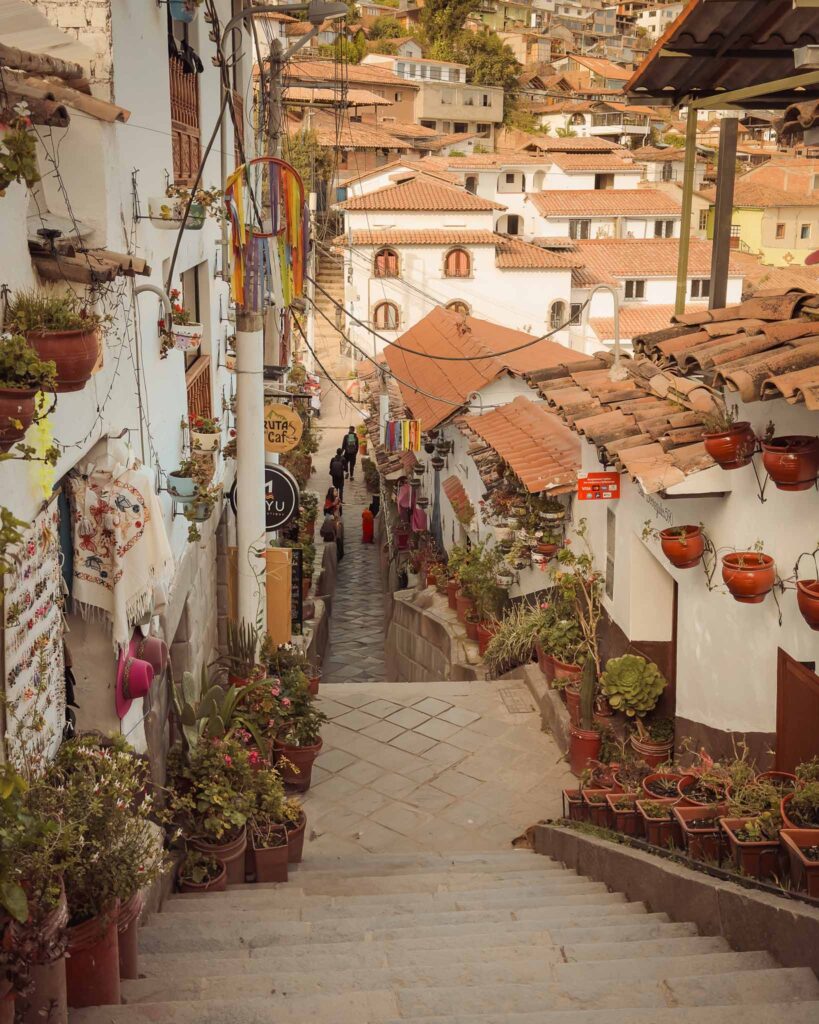
Search for Sapantiana Aqueduct (Huaca de Sapantiana) on your maps and walk up from there. Continue up the stairs past the aqueduct and keep climbing the small hill above it — the path is not well-marked and is more of a local spot than a tourist destination, which is exactly why it’s worth finding. At the top you are rewarded with a panoramic view of Cusco and the Andes mountains that is genuinely extraordinary — and almost entirely devoid of other visitors.
When we visited in March-April entry was completely free with no ticket required. Access status can occasionally change so check current conditions before making it a firm plan — but as of our visit this was a hidden gem that cost nothing and delivered one of the best views in Cusco.
(For a detailed photo guide to all of Cusco’s most photographable spots including exact locations and tips for each — read our dedicated Instagrammable Spots in Cusco guide. [link when live])
The Llama Moment
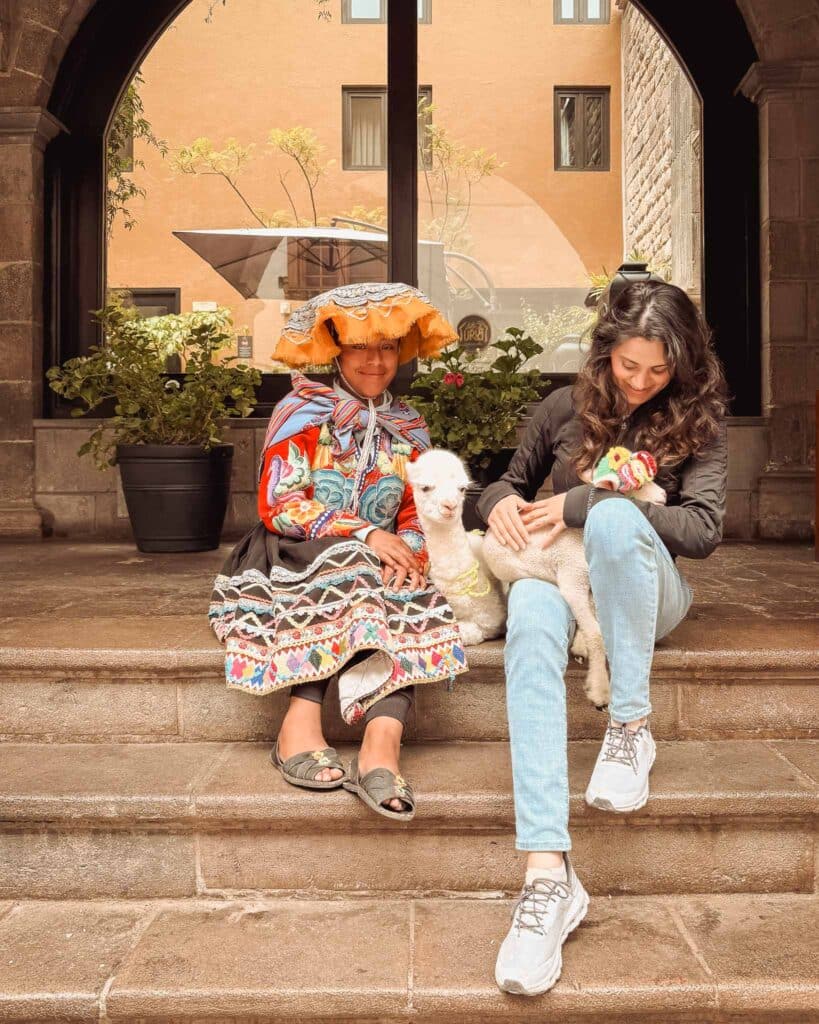
Somewhere in the San Blas neighbourhood we encountered a local woman with a llama. This happens in Cusco — local women, often part of traditional textile cooperatives, walk with llamas and alpacas and offer photos with them for a small tip.
She let me hold the llama and get photos. I was unreasonably excited about this. The llama was unbothered.
A note on responsible animal tourism in Cusco: when seeking out llama photo opportunities, look for women who appear to be part of local textile cooperatives — identifiable by their traditional dress and handmade textile goods. This supports local artisans directly and is the more ethical approach to what has become a popular tourist interaction. Treat the animals gently and with respect and tip generously.
It was genuinely one of the most joyful small moments of the whole Peru trip.
Where to Eat and Drink in Cusco
Cappuccino Café (breakfast) Already covered above — the Plaza de Armas window tables make this the essential Cusco breakfast. Good food, excellent view, the right start to a full day.
Local Restaurante (coffee stop — honest review) We stopped here for coffee and a pasta to share mid-afternoon. The interiors are genuinely cool — interesting design, good atmosphere, the kind of space that photographs well. The service was lovely and the staff were warm and welcoming.
The food and coffee, however, were mediocre. Nothing offensive — just unremarkable in a city where the food standard is generally high. Worth knowing before you go: great for the aesthetic and a sit-down rest, not somewhere to build a meal around. The cool interiors do not lie but the menu does not quite match them.
Picarones — Street Vendors The essential Cusco street food experience. Sweet potato and squash doughnuts fried light and soaked in syrup — they are significantly better than any description does justice and significantly better than they sound. Find a street vendor in the afternoon or evening, pay the small fee, eat them immediately while they’re hot. We had them in Cusco and again in Lima on our last day. Both times were correct decisions.
Chicken Empanadas — Street Food Another street food worth seeking out in Cusco — the empanadas are excellent, inexpensive, and the perfect accompaniment to an afternoon of wandering San Blas.
Coca Leaf Tea — Everywhere Available at virtually every café and restaurant in Cusco. Order it. Sip it slowly. It helps with the altitude and tastes pleasant. Make it a consistent habit throughout your Cusco stay.
Shopping the Local Markets
Cusco’s local markets are where to buy your Peru souvenirs — and importantly, where to buy them at honest prices.
We had already bought some things in Aguas Calientes before reaching Cusco and discovered the hard lesson that most Peru travelers learn: Aguas Calientes has worse selection and higher prices than Cusco’s markets. If you’re planning to buy textiles, alpaca goods, ceramics, jewellery or other crafts — wait until Cusco.
The local markets in San Blas and the surrounding streets have genuinely beautiful handmade goods at prices that feel fair rather than inflated. Browse slowly, compare a few stalls, and don’t be afraid to take your time. The quality of Peruvian craft work — particularly the alpaca textiles — is exceptional and worth investing in properly.
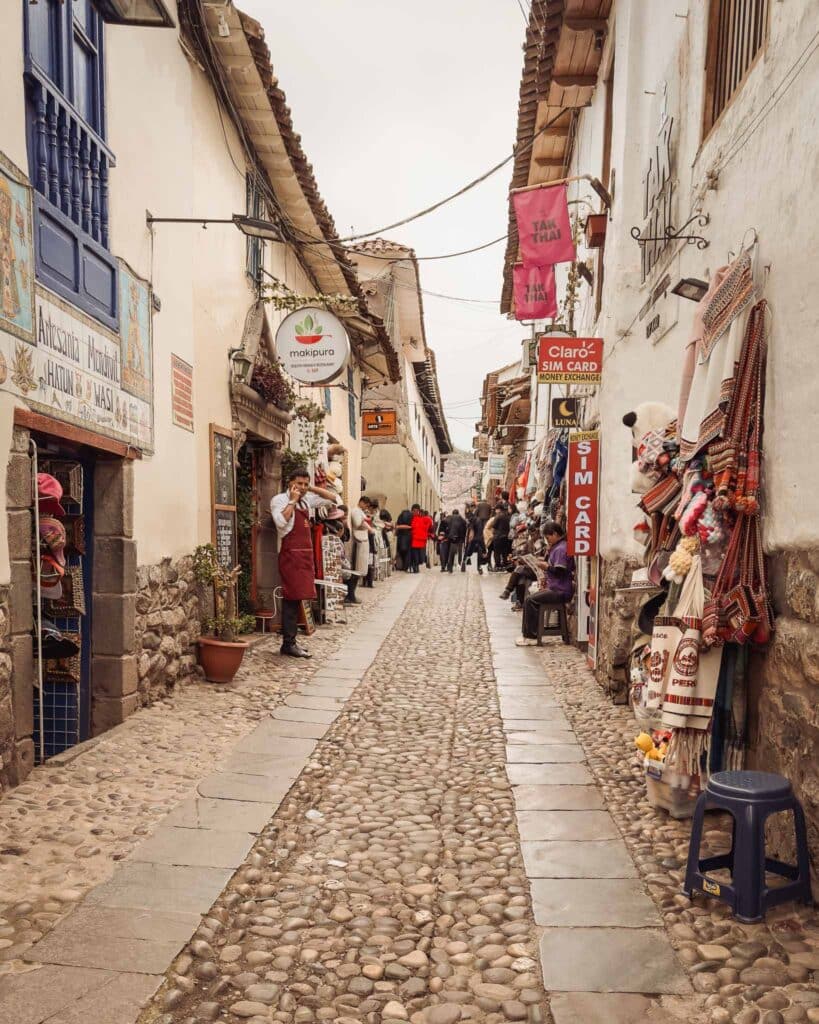
Practical market tip: Prices are often negotiable at market stalls but do so respectfully. The artisans are selling their own work at prices that support their livelihoods — aggressive bargaining on handmade goods is worth avoiding.
Pariwana Hostel Cusco — What to Expect
We stayed at Pariwana Hostel in both Lima and Cusco — the same brand, a similarly excellent experience.
The Cusco property has the same welcoming social atmosphere as Lima — easy to meet people, comfortable common areas, reliable Wi-Fi, and staff who know the city well and give genuinely useful recommendations. Location-wise it puts you within easy reach of Plaza de Armas and the start of the San Blas walk.
For solo female travelers the same options apply as in Lima — female-only dorms, mixed dorms, and private rooms. If altitude sensitivity is a concern, a private room gives you the space to rest properly without the social pressure of a shared dorm on arrival night.
Altitude tip specific to Pariwana Cusco: Tell the hostel staff how you’re feeling on arrival. They deal with altitude-affected guests regularly and have good practical advice on local remedies and pacing your first day.
Cusco in March and April — Shoulder Season Advantages
March and April sit at the tail end of Cusco’s rainy season — and the city in this period has a quality that the dry peak season months don’t offer.
The hills surrounding Cusco are lush and deeply green, often wrapped in morning mist that lifts through the day to reveal dramatic Andean peaks behind the city. The light is softer. The colours are richer. And the crowds — while present — are noticeably more manageable than the July-August peak when Cusco operates at maximum tourist capacity.
The trade-off is occasional afternoon rain — pack a light waterproof layer and embrace it. A quick rain shower in the Cusco afternoon followed by clearing skies and golden light is one of the more beautiful things the city offers in shoulder season.
For travelers with any flexibility on timing — March-April and September-October are the Cusco sweet spots.
Practical Cusco Travel Tips
Getting Around Cusco The historic centre and San Blas are best explored entirely on foot — the distances are manageable and the streets reward walking. For longer distances or evening travel use Uber or a reputable taxi arranged through your hostel.
Altitude Medication Pick up coca leaf candy from Plaza de Armas vendors on arrival. Sorojchi pills are also available at local pharmacies. Both are widely used and effective for mild altitude symptoms.
Cusco Boleto Turístico The Cusco Tourist Ticket — Boleto Turístico — covers entry to many of the city’s major archaeological sites and museums. If you plan to visit multiple sites it is worth purchasing. Available at the main office on Avenida El Sol or at some of the sites themselves.
Shoes San Blas is steep and cobblestoned. Comfortable walking shoes with grip are not optional — the streets are uneven and can be slippery after rain. Leave the fashion trainers for Lima.
Weather March-April brings occasional afternoon rain. Pack a light waterproof layer that you can add and remove easily as the day shifts. Mornings are often clear, afternoons can cloud over, evenings settle again.
Photography The light in Cusco in shoulder season is extraordinary — particularly the misty morning light over the hills and the golden hour glow on the Plaza de Armas. Bring your camera and get out early.
Read More Articles!
Final Thoughts — Is Cusco Worth More Than a Logistics Stop?
Completely and without reservation.
Cusco is one of those cities that gives more the slower you move through it. The San Blas streets reveal themselves gradually. The hidden viewpoint at Sapantiana requires the willingness to climb past what’s obvious. The Picarones are only as good as they are because you found them from a street vendor rather than a tourist menu.
It is a city built on layers — Inca foundations under Spanish colonial walls under a living, breathing modern Peruvian city — and every layer is worth the time it takes to find it.
Don’t treat Cusco as a stopover. Give it a full day. Walk slowly. Buy the alpaca textile. Hold the llama. Make the most of the altitude candy.
You came all this way. Show up for the city.
Let’s Chat!
Have you been to Cusco or is it on your Peru list? Would you brave the altitude for the hidden Sapantiana viewpoint? And would you hold the llama? Drop a comment below — I’d love to hear from you. Save this guide for your Peru planning and share it with someone who needs Cusco properly on their radar. 🦙
Cusco Peru Travel Guide: Your Most Asked Questions (FAQ)
Absolutely — and I’d argue it’s one of the best times to go. The hills surrounding Cusco are lush and deeply green in March-April from the rainy season, often wrapped in dramatic morning mist. The crowds are noticeably more manageable than peak season and the city has a more local, less tourist-saturated energy. The trade-off is occasional afternoon rain — pack a light waterproof layer and embrace it as part of the experience.
The top three from our visit: Calle Siete Borreguitos for the beautifully painted alley, Mirador Siete Borreguitos for the broader neighbourhood view, and the hidden panoramic viewpoint above the Sapantiana Aqueduct — not well listed on maps but worth every step of the climb for the view of Cusco and the Andes. For a complete photo location guide with exact directions and tips for each spot read our dedicated Instagrammable Spots in Cusco post. (link when live)
Pick up coca leaf candy from vendors at Plaza de Armas as soon as you arrive — it is widely used and genuinely effective for mild symptoms. Order coca leaf tea at every café you sit down in. Rest properly on arrival day rather than pushing straight into a full activity schedule. Drink water constantly and avoid alcohol on your first night. Give your body at least half a day to adjust before attempting the steeper streets of San Blas or any high-altitude day trips.
Yes — completely. San Blas is well-populated with locals and visitors throughout the day and is one of the most pleasant neighbourhoods in Cusco to wander. The streets are steep and cobblestoned so wear comfortable shoes with grip. Safety is not a concern during daylight hours. For solo female travelers specifically — San Blas during the day is an entirely comfortable and enjoyable solo experience.