Estimated reading time: 17 minutes
I spent three weeks driving through Italy in September as part of a larger European adventure — solo for parts, with my partner for others. Every opinion, recommendation, and honest take in this guide is based entirely on firsthand experience.
Bongiorno from someone who went to Italy expecting it to be beautiful and came back completely unprepared for just how much it exceeded that expectation.
I’d heard people talk about falling in love with Rome my whole life. I’d seen the Tuscany countryside in films and thought — yes, stunning, I get it. I’d scrolled through Amalfi Coast photos and assumed it would look better in real life than on a screen. And still, somehow, Italy surprised me at every turn.
This trip was part of a bigger European adventure — starting in Glasgow to visit family, then three days solo in Northern Ireland, Dublin with my partner, and then landing in Venice for the main event: a three-week Italian road trip from north to south. Venice to the Dolomites, Lake Como to Lake Garda, Milan to Tuscany, Amalfi Coast to Rome. Solo for stretches, together for others.
This is your complete 3 weeks in Italy itinerary — the cities, the coast, the lakes, the food, the honest comparisons, and everything that actually helps when you’re planning a trip like this.
3 Weeks in Italy — At a Glance
📍 Route: Venice → Dolomites → Lake Como → Lake Garda → Milan → Tuscany/Florence/Pisa → Amalfi Coast → Portofino/Santa Margherita → Rome → Vatican City 🚗 Getting Around: Rental car for most of Italy, train for solo sections 📅 When We Traveled: September ⏱️ Duration: 3 weeks (21 days) in Italy 💰 Budget Level: Mid to Luxury 👫 Travel Style: 50/50 solo and couple travel 🌡️ Weather in September: Warm, sunny, fewer crowds than peak summer — ideal
Table of contents
- Why September is the Sweet Spot for Italy
- The Italy Road Trip Route — North to South Overview
- Venice — The Beginning of Everything
- The Dolomites
- Lake Como & Lake Garda — The Honest Lakes Comparison
- Milan — The Rest Stop That Delivered
- Tuscany — Florence, Pisa & the Countryside
- Amalfi Coast — Positano, Amalfi & the Open Water
- Driving the Amalfi Coast vs. Taking the Train — What to Know
- Portofino & Santa Margherita
- Rome — The City That Rewired Me
- Vatican City — The Final Day
- Eating Through Italy — Regional Food You Actually Need to Try
- Practical Italy Road Trip Tips (ZTL Zones)
- Solo vs. Couple Travel — Balancing Independence and Romance
- Final Thoughts — Is 3 Weeks in Italy Worth It?
- 3 Weeks in Italy Itinerary: Your Most Asked Questions (FAQ)
Why September is the Sweet Spot for Italy
If you’re deciding when to visit Italy and flexibility is an option — choose September without hesitation.
July and August are peak season in Italy. The crowds at major sites are intense, accommodation prices are at their highest, and the heat in Rome and the Amalfi Coast can be genuinely punishing. September changes the equation entirely. The weather is still warm and sunny — perfect for coastal towns and outdoor dining — but the summer rush has eased. You get shorter queues, more availability, and a slightly more local energy in cities that spend July and August overwhelmed by tourists.
Tuscany in September is particularly special. The harvest season begins, the light turns golden earlier in the evening, and the vineyards are at their most beautiful. If there is a better month to be in the Italian countryside, I haven’t found it.
The Italy Road Trip Route — North to South Overview
Our 3 week Italy road trip ran roughly north to south — starting in Venice on the northeastern coast and working our way down through the heart of the country to Rome. Here’s the broad shape of the journey:
Venice → Dolomites → Lake Como → Lake Garda → Milan → Tuscany (Pisa, Florence, countryside) → Amalfi Coast (Positano, Amalfi, Ravello) → Portofino/Santa Margherita → Rome → Vatican City
It was ambitious. More traveling than vacationing at times — 21 days covering that ground means you’re moving frequently and the pace requires energy. But the payoff of seeing that range of landscapes, cuisines, and cultures within a single country is something I’d do again without hesitation.
If you have more time — and Italy rewards more time — slow down in the regions that speak to you. For me that would be Rome and Tuscany. More on why shortly.
Venice — The Beginning of Everything
Venice is unlike any city on earth and arriving there at the start of a 3 week Italy itinerary sets an immediate and slightly surreal tone.
We spent one night — long enough to feel the magic of the canals and the complete absence of cars, short enough to leave genuinely wanting more. Venice deserves more than one night and it will tell you so clearly.
What to eat in Venice: Cicchetti — the Venetian answer to tapas. Small pieces of baguette topped with regional flavours: pesto, sardines, local cheeses, cured meats. They’re served in traditional bacaro bars throughout the city and are the most authentically Venetian thing you can eat. Vegan and vegetarian versions are widely available. Don’t leave Venice without trying them.
The Dolomites
Driving into the Dolomites from Venice is one of those moments where you genuinely have to remind yourself you’re still in the same country.
The landscape shifts dramatically — from the flat Venetian plains to some of the most dramatic mountain scenery in Europe. Jagged pale rock peaks, alpine meadows, and a completely different pace of life. If you’re road-tripping Italy and skipping the Dolomites to save time, reconsider. The drive alone is worth it.
Lake Como & Lake Garda — The Honest Lakes Comparison
Both beautiful. Very different experiences. And if you’re choosing between them for your 3 weeks in Italy cities coast and lakes itinerary — here’s my honest take after seeing both.
Lake Como wins for pure beauty. It is one of the most visually stunning places I have ever been. The combination of the deep blue water, the surrounding mountains, the elegant villas on the shoreline — it photographs beautifully and looks even better in person. If you want views and atmosphere and the feeling of being somewhere genuinely extraordinary, Lake Como delivers completely.
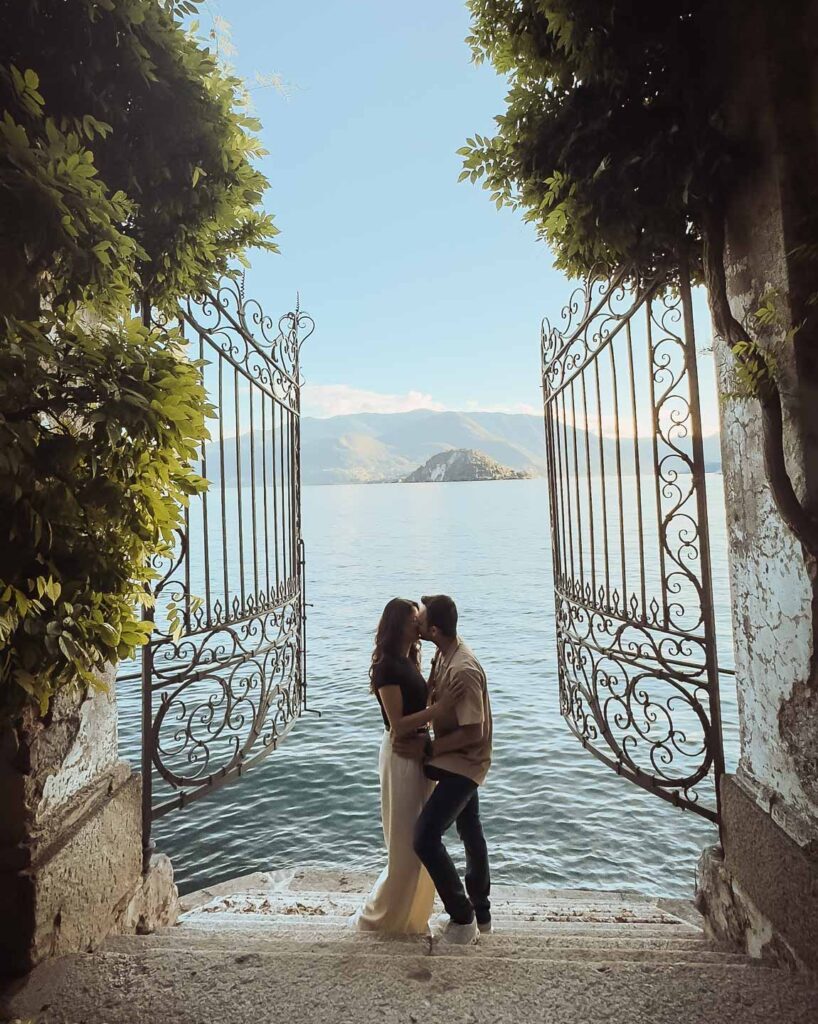
Lake Garda is larger, more varied, and arguably more liveable. It has a different energy — less exclusive, more accessible, with more to do around its shores. Charming towns dot the lakeside and the surrounding countryside offers wineries and olive groves that make for a lovely day of wandering.
If I had to pick one for a first visit: Lake Como for the experience, Lake Garda if you want more space and variety. Ideally, visit both — they’re close enough to combine easily on an Italy road trip routing.
Milan — The Rest Stop That Delivered
We used Milan primarily as a rest point between the lakes and Tuscany — and it surprised us with how much it offered even in a short stay.
Milan is Italy’s fashion and design capital and it wears that identity confidently. The Duomo di Milano is genuinely spectacular — one of the most ornate Gothic cathedrals in the world and worth time beyond a quick photo. The Galleria Vittorio Emanuele II next to it is equally beautiful. For a city we treated as a logistics stop on our Italy road trip, Milan punched well above its weight.
Tuscany — Florence, Pisa & the Countryside
Tuscany is bigger than you think. And more beautiful than you’re imagining right now, even if you’ve seen every photo of it that exists.
Florence is stunning and entirely walkable — two days in the city covers the major highlights comfortably. The Uffizi Gallery, the Ponte Vecchio, the Duomo, Piazzale Michelangelo for sunset views over the city. Florence rewards slow walking and getting slightly lost in its medieval streets.
Pisa is worth the stop — the Leaning Tower is genuinely more impressive in person than the photos suggest, which is not something you can say about every famous landmark.
The Tuscan countryside is where Tuscany actually lives. Rolling hills covered in cypress trees and vineyards, hilltop villages, working farms that have been producing wine and olive oil for centuries. The sunsets here are extraordinary — the light does something in the Tuscan hills that I’ve never seen replicated anywhere else.
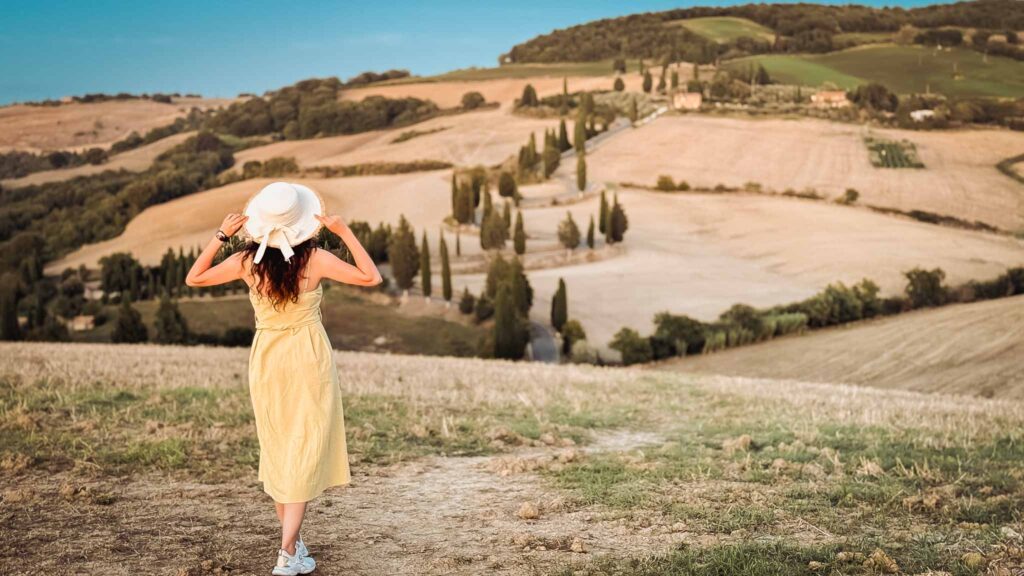
My strongest recommendation for Tuscany: book yourself into a countryside resort for two to three days and use it as your base. Do the wine tours, the cheese tastings, the olive oil tastings, the vineyard drives. You need a car to truly appreciate the region — without one you’ll see a fraction of what’s available. And being in the countryside rather than commuting from Florence changes the entire experience. This is where Tuscany reveals itself properly.
What to eat in Florence and Tuscany: The Florentine steak — bistecca alla Fiorentina — is the dish the region is famous for and it earns that reputation. The meat-focused cuisine here is exceptional. And the paninis in Florence are among the best things I ate in all of Italy — All’Antico Vinaio is the most well-known spot with queues to match, but my personal favourite was Il Latini — the best panino I had anywhere on the trip.
Amalfi Coast — Positano, Amalfi & the Open Water
The Amalfi Coast is beautiful. It is also busy, expensive, and demands a sense of humour about the roads — narrow, winding cliff roads with traffic in both directions that will test your driving confidence in ways the Tuscany countryside does not.
Worth it? Completely.
Positano is the most photographed town on the coast and yes, it is exactly as beautiful as every image suggests. It is also the most touristy and the most expensive — go in knowing this and enjoy it rather than resenting it.
Amalfi town has more local character and a slightly more manageable energy. The cathedral is stunning. The lemon everything — limoncello, lemon sorbet, lemon pizza — is a regional speciality that deserves your full attention. The lemon pizza sounds unusual and tastes refreshing and bright in a way that makes complete sense once you’re there. The limonata on a hot afternoon is the most reviving thing you can drink anywhere on the coast — intensely lemony, cold, and exactly what you need when the heat has fully got to you.
The seafood along the coast is excellent — simple preparations, incredibly fresh, the kind of food that tastes best eaten outside looking at water.
The highlight of our Amalfi stay: renting our own motorboat and heading out into open water. No tour group, no schedule, just the two of us on the Tyrrhenian Sea with the coastline rising dramatically behind us. If you can do this — do this.
Driving the Amalfi Coast vs. Taking the Train — What to Know
The Amalfi Coast road is one of the most beautiful drives in the world. It is also one of the most stressful.
The SS163 — the coastal road connecting the towns — is narrow, winding, and shared with buses, scooters, tour coaches and other rental cars driven by people who are equally nervous and equally determined not to show it. There are sections where two vehicles passing each other requires one to reverse to a wider point. The views from the road are extraordinary. The white knuckles are real.
We drove it — and I’m glad we did. Having a car gave us the freedom to stop at viewpoints, arrive at towns on our own schedule, and carry luggage without negotiating ferry timetables. But I want to be honest: it requires concentration, patience, and a very clear agreement with yourself that the car might get a scratch and that’s okay.
The alternatives worth knowing:
- Ferry services run between the main coastal towns — Positano, Amalfi, Ravello — and are a genuinely beautiful and stress-free way to move between them. Highly recommended for day trips between towns once you’ve parked your car.
- Local buses (SITA) cover the coastal road and are how locals navigate it — cheap, frequent, and someone else is doing the driving.
- Parking in Positano and Amalfi is limited and expensive — factor this into your planning if you’re driving.
My honest recommendation: Drive the coast at least one way for the experience and the viewpoints. For moving between specific towns once you’re there, take the ferry. Best of both worlds.
(Full Italy road trip driving guide — including ZTL zones, parking tips and regional road conditions — coming soon in the Italy series.)
Portofino & Santa Margherita
From the Amalfi Coast we headed north to the Ligurian Riviera — Portofino and Santa Margherita Ligure — and found a similar coastal beauty with a different, slightly quieter character.
The landscape shares DNA with the Amalfi Coast — colourful buildings stacked on cliffsides above turquoise water — but with less of the tourist intensity. Portofino in particular has an exclusive, yachting-village atmosphere that feels like a different world. Both are worth a stop if your Italy road trip route takes you through the northwest.
Rome — The City That Rewired Me
I had been told my whole life that Rome was special. I understood this intellectually. And then I arrived and understood it completely differently.
Rome is not just a beautiful city. It is a city where beauty is structural — built into the streets, the piazzas, the buildings you walk past on the way to somewhere else. The Colosseum is extraordinary. The Trevi Fountain and the Spanish Steps deliver on their reputations. But what genuinely caught me off guard was simply walking the streets of Rome and encountering art, architecture and history at every turn without looking for it.
I saw Rome fall in love with itself in the people who live there, which made me fall in love with it too. If Florence is the city you appreciate, Rome is the city that takes hold of you.
I need to come back to Rome. That feeling is very clear.
Rome and food: Rome as Italy’s capital pulls cuisine from across the country — you’ll find excellent versions of dishes from every region here. The pastas, the pizzas, the supplì, the Jewish-Roman dishes around the old ghetto. Eat widely and follow your instincts rather than the tourist menus.
Vatican City — The Final Day
My last full day in Italy was spent at Vatican City — a visit I’d been saving deliberately for the end, like a final chapter.
The Vatican Museums, the Sistine Chapel, St Peter’s Basilica — the scale and the density of art and history concentrated in this small sovereign state is almost overwhelming. Go early, book tickets in advance, and give yourself a full morning at minimum.
I visited in September 2025 during the Jubilee Year — a major holy year for the Catholic Church that brought millions of additional pilgrims to Rome throughout the year. The Vatican and St Peter’s Square had a particular energy during this period — profound and busy in equal measure. If you’re planning a future visit, the Jubilee concluded in January 2026, so crowds around Vatican City should feel more manageable going forward.
Standing in St Peter’s Square on my last day in Italy felt like exactly the right way to end the trip.
Eating Through Italy — Regional Food You Actually Need to Try
Italian food is not one cuisine. It is dozens of regional cuisines that happen to share a country. The biggest mistake you can make in a 3 week Italy itinerary is eating the same pizza and pasta everywhere and missing what each region actually does best.
Here’s a quick regional food guide based on what we ate:
Venice: Cicchetti — small topped baguette bites at traditional bacaro bars. Try pesto, sardines, local cheese. This is the authentic Venetian eating experience.
Florence & Tuscany: Bistecca alla Fiorentina — the legendary Florentine steak. Paninis from All’Antico Vinaio or better yet Il Latini. Meat-focused dishes, local Chianti, pecorino cheese from the countryside.
Amalfi Coast: Fresh seafood, lemon pizza, limonata, limoncello. Everything lemon — embrace it completely.
Rome: Everything. Rome is the one city where you can eat from every Italian tradition. Don’t overthink it — follow the smell of good food and sit down.
Everywhere: Gelato daily. This is not negotiable and requires no justification.
Practical Italy Road Trip Tips (ZTL Zones)
Driving and ZTL Zones Italy’s historic city centres have restricted traffic zones called ZTL (Zona a Traffico Limitato) — driving into them without a permit results in automatic fines that follow you home. Research which areas of each city have ZTL restrictions before you drive in, park outside the zone and walk or use public transport into the centre. (Full Italy road trip driving guide and ZTL tips coming soon in the Italy series.)
Car vs Train A rental car is essential for Tuscany, the Dolomites, and moving between regions efficiently on a 3 week Italy road trip. For solo sections and city-to-city travel, Italy’s train network is excellent — fast, reliable, and often more practical than driving into busy city centres. A combination of both gives you the best of each. (Full Italy by train guide coming soon.)
September Travel Shoulder season Italy is genuinely the sweet spot — better weather than spring, far fewer crowds than July and August, harvest season in Tuscany. If you’re flexible on timing, September is the answer.
Pacing Three weeks covering Venice to Rome is ambitious. Build in at least two or three days in Tuscany where you’re not moving — the countryside rewards stillness. And give Rome more time than you think you need.
Solo vs. Couple Travel — Balancing Independence and Romance
This trip was uniquely split — and that split taught me something about how differently the same country can feel depending on who you’re with.
Traveling with my partner through the Italian road trip — Venice, the lakes, Milan, Tuscany, and the Amalfi Coast — had a natural shared energy to it. The motorboat on the Amalfi Coast, the Tuscan sunsets, the late dinners with wine — those moments felt amplified by having someone beside you to turn to and say “are we actually here right now?”
The solo stretches — parts of Tuscany at the end, the wandering through Rome — had a completely different quality. Quieter. More internally focused. You notice different things when you’re alone. You make different decisions, stop for longer at things that interest only you, eat at the counter instead of a table. There is a particular kind of freedom in solo travel that doesn’t disappear just because you’re in a relationship — and Italy, with its café culture and walkable cities and general acceptance of a person dining alone with a glass of wine and a book, is one of the best countries in the world to experience it.
My honest take: both are valid, both are valuable, and doing a trip that includes both within the same journey gives you a fuller picture of a destination than either would alone. If you’re in a relationship and considering a solo leg of a bigger trip — do it. Italy will welcome you either way.
(For a deeper dive into solo female travel in Italy — safety, logistics and honest reflections — read our dedicated guide here.
Read More Articles!
Final Thoughts — Is 3 Weeks in Italy Worth It?
Every single day of it.
Italy is one of those destinations that has earned its reputation so completely that visiting almost feels like a risk — what if it doesn’t live up to what everyone says? It lives up. And then it goes further.
The food is better than the photos. The art is more overwhelming in person. The streets of Rome hit differently than any description prepares you for. The Tuscan sunset from a countryside resort is the kind of thing you describe badly to people who weren’t there.
Go for as long as you can. Eat everything. Drive the countryside. Rent a motorboat on the Amalfi Coast. Have a Prosecco on your second-last night and a takeaway tiramisu and feel the particular bittersweetness of a trip that’s about to end.
It is absolutely worth it.
Let’s Chat!
Have you been to Italy or is it the dream trip you keep putting off? Which region would you visit first — Rome, Tuscany, Amalfi or the lakes? And would you rent a motorboat on the Amalfi Coast? Drop a comment below — I’d love to hear from you. Save this guide and share it with someone who needs Italy in their life. 🇮🇹
3 Weeks in Italy Itinerary: Your Most Asked Questions (FAQ)
Absolutely not — in fact 21 days barely scratches the surface of what Italy offers. The key is embracing the slow travel approach rather than trying to tick every city off a list. Three weeks covering the north-to-south route gave us extraordinary range but also meant moving frequently. If you have three weeks, build in longer stays in the regions that speak to you — Tuscany and Rome in particular reward more time.
Yes — and I did exactly this for half of this trip. Italy’s major cities and tourist regions are manageable and enjoyable for solo female travelers. Rome, Florence, and the Tuscany countryside all felt comfortable and welcoming. The usual sensible precautions apply — stay aware, trust your instincts, stick to well-lit areas at night. (Full solo female Italy guide coming soon.)
The north-to-south route we took — Venice, Dolomites, lakes, Milan, Tuscany, Amalfi, Rome — covers Italy’s greatest hits efficiently while showing you the remarkable diversity of the country. If time is limited, prioritize Tuscany and Rome with a coastal stop. If time allows, add the northern lakes and Dolomites — they change the trip completely.
It varies significantly depending on travel style. For mid-range travelers expect roughly $200–300 USD per person per day covering accommodation, food, transport and activities. Luxury accommodation in Tuscany, Positano or Rome pushes that higher — boutique countryside resorts and Amalfi clifftop hotels command premium prices, particularly in September. Budget travelers can do Italy for significantly less by prioritizing hostels, trains over car rental, and eating where locals eat. (Full Italy road trip budget guide coming soon.)
September is genuinely the sweet spot for Italy travel. You avoid the intense July and August crowds, accommodation prices ease slightly, the weather remains warm and sunny, and Tuscany enters harvest season making the countryside particularly beautiful. We traveled in September and found it dramatically more enjoyable than peak summer would have been — shorter queues, more availability, and a noticeably more local atmosphere in cities like Rome and Florence.