
Estimated reading time: 17 minutes
I traveled Peru in March-April across Lima, Cusco, Aguas Calientes and Machu Picchu — part solo, part with my best friend. Every restaurant, hostel tip, and honest opinion in this guide is based entirely on firsthand experience.
Peru had been on my list for a long time. And when I finally booked it — flying solo from Toronto to Lima, with my best friend joining me the next day from the US — I had no idea just how completely it would exceed every expectation I’d built up.
Seven days. Two cities. One ancient citadel. A mountain that looks like it was painted by someone with an extraordinary imagination. And more ceviche than I thought one person could reasonably consume.
This is your complete 7-day Peru itinerary — honest, practical, and full of the specific details that actually help when you’re planning a trip like this. The restaurants worth finding, the ticket system nobody explains clearly, why we chose ATVs over hiking at Rainbow Mountain, and what it actually feels like to stand at Machu Picchu with a private guide who makes the whole thing personal.
Let’s get into it!
This post contains affiliate links, which means I may earn a small commission at no extra cost to you.
Peru Trip At a Glance
📍 Destinations: Lima → Cusco → Rainbow Mountain → Aguas Calientes → Machu Picchu → Cusco → Lima ✈️ Flying From: Toronto (YYZ) direct with Air Transat 📅 Season: March-April (shoulder season) ⏱️ Duration: 7 days 🏨 Where We Stayed: Pariwana Hostel (Lima & Cusco) + hotel in Aguas Calientes 💰 Budget Level: Budget-friendly to mid-range 👯 Travel Style: Solo Day 1, then with best friend 🌡️ Weather in March-April: Warm in Lima, cool in Cusco, cold at altitude
Table of contents
- Peru Trip At a Glance
- Why Peru in 7 Days Works
- Getting There — Toronto to Lima
- Day 1: Lima Solo — Miraflores & Barranco
- Day 2: Lima With a Friend — Barranco, Boardwalk & Larcomar
- Day 3: Cusco & Rainbow Mountain by ATV
- Day 4: The Scenic Train to Aguas Calientes
- Day 5: Machu Picchu — Circuit 2 With a Private Guide
- Day 6: Exploring Cusco — San Blas & Hidden Spots
- Day 7: Lima — Beach Day, Markets & Goodbye
- Where to Stay — Pariwana Hostel Lima & Cusco
- Practical Peru Travel Tips
- Final Thoughts — Is Peru Worth It?
- 7 Day Peru Itinerary: Your Most Asked Questions (FAQ)
Why Peru in 7 Days Works
Seven days in Peru sounds ambitious. And it is — but it’s also the perfect amount of time to cover the country’s three most iconic experiences without burning out.
The key is structure. Lima is your entry and exit point — it deserves two days both coming and going. Cusco is your highland base. And the Machu Picchu experience, including the train journey and overnight in Aguas Calientes, earns its own dedicated day.
What makes this itinerary work specifically is flying between Lima and Cusco rather than taking the bus — a journey that would add 20+ hours of overland travel to a week-long trip. That one decision buys you two full extra days of actual experience.
We traveled in March-April — shoulder season — and it was one of the best decisions we made. Fewer crowds at key sites, easier ticket availability, and a calmer, more local energy in both cities. If you’re flexible on timing, shoulder season Peru is genuinely worth considering.
Getting There — Toronto to Lima
We flew direct from Toronto Pearson to Lima with Air Transat — a straightforward option for Canadian travelers that removes the need for a US connection. The flight is roughly 8-9 hours and arrives into Jorge Chávez International Airport.
Lima’s airport is well-organised and immigration moves efficiently. From the airport, we took a taxi to our hostel in Miraflores — the most recommended district for first-time visitors and our base for both Lima stays.
Day 1: Lima Solo — Miraflores & Barranco
My first day in Lima was solo — my friend was flying in the next morning — and it turned out to be one of my favourite days of the entire trip.
I checked into Pariwana Hostel in Miraflores early morning, handed my bags over to reception, and had breakfast at their rooftop café while the city woke up below me. There’s something about starting a solo trip on a rooftop with coffee and nowhere to be immediately that feels like exactly the right pace.
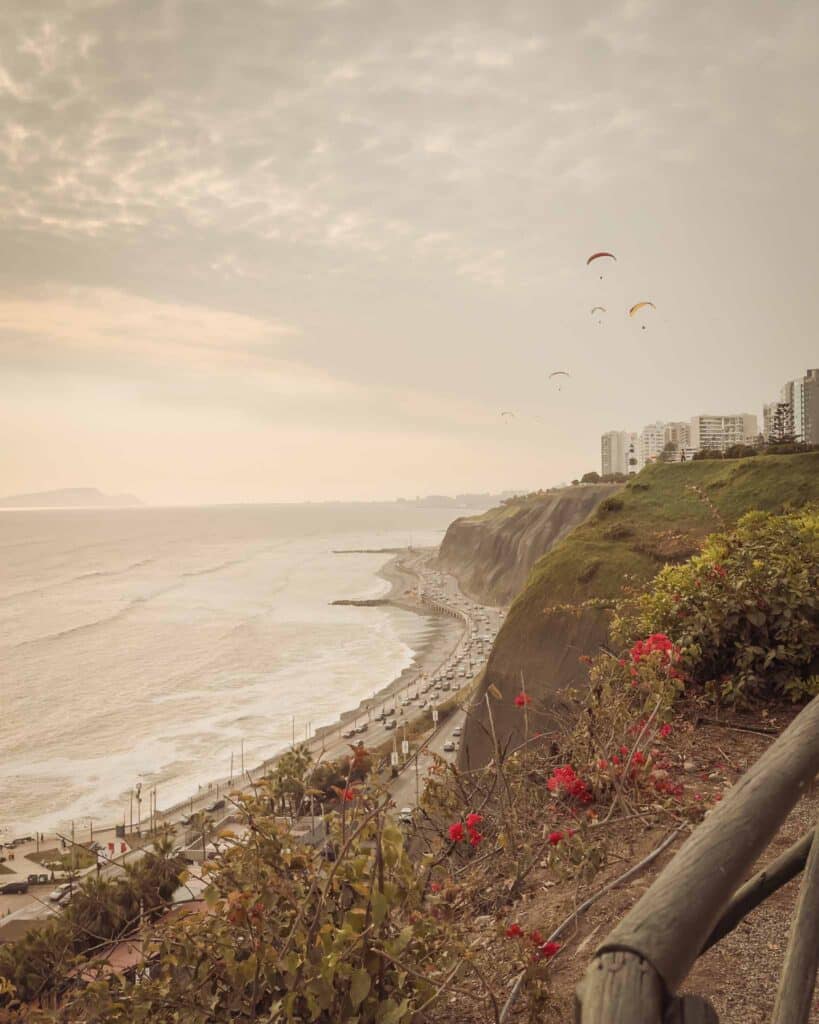
Once I’d settled in I walked to Parque del Amor (Love Park) — a clifftop park overlooking the Pacific with mosaic-tiled walls and sweeping ocean views. It’s romantic even solo, which feels like the point.
Lunch at Punto Azul was the highlight of the day and honestly one of the best meals of the whole trip. I started with a pisco sour — because it would be wrong not to — and they brought out these incredible popped corn snacks to nibble while I read my book. Zero to One by Peter Thiel at a table in Lima with a pisco sour in hand. There are worse ways to spend an afternoon. The seafood ceviche that followed had everything — prawns, fish, octopus — all the citrus brightness of a great Peruvian ceviche with sweet potato on the side to balance the sourness. I was nicely buzzed and thoroughly happy by the time I walked back to the hostel.
After a nap and check-in to my private room, I took a cab to Barranco — Lima’s bohemian neighbourhood — for the evening. Street art, local markets, a lively but relaxed energy. On my way back I grabbed a street dessert from a vendor — a cup of what tasted exactly like crème brûlée, smooth and caramelised and perfect. I ate it in the cab back to the hostel and ended the night reading my book.
Solo travel days don’t get much better than that.
Day 2: Lima With a Friend — Barranco, Boardwalk & Larcomar
My best friend arrived from the US and we hit the ground running.
We started at Barra Botánica in Miraflores for breakfast — excellent food, great coffee, exactly the kind of spot that makes you want to linger longer than you should when you have a full day planned.
From there we cabbed to Barranco so she could experience it properly — the market, the street art, the famous Puente de los Suspiros (Bridge of Sighs). We walked across and through the neighbourhood before heading back to Miraflores to show her the Love Park and then down the full length of the boardwalk along the cliffs. The Pacific below, the paragliders overhead, the ocean breeze — it’s a genuinely beautiful stretch.
We ended the day at Larcomar — an upscale cliff-side mall built into the Miraflores seafront that sounds less impressive than it actually is. We ate at Tanta, a well-known Peruvian restaurant inside, and it was excellent. The pepper sauces in my ceviche were a revelation. My friend ordered a quinoa stir fry and beansprouts as a vegetarian — she loved it. We shared jalapeño poppers and two ceviches and sat there far too long, which is exactly what you should do on a second day in Lima.
That night we took a late flight to Cusco — no footage, just the sleep we needed before Rainbow Mountain.
Day 3: Cusco & Rainbow Mountain by ATV
Rainbow Mountain — Vinicunca — sits at over 5,000 metres above sea level. Most people hike it. We didn’t.
Our tour picked us up from Plaza de Armas in Cusco in a shared minivan before sunrise. We stopped along the way at a roadside spot where a vendor was pulling fresh bread straight from an outdoor oven — we bought one and ate it warm in the van. Small moments like that are what travel is made of.
After a buffet lunch at a stop along the route — decent, included in the tour price — we arrived at the ATV base. This is where we deviated from the standard tour and it was absolutely the right call. Instead of the traditional three-hour uphill hike at extreme altitude, we rode ATVs up the mountain trail. Self-driving an ATV at 5,000 metres with mountain views in every direction is an experience I’d recommend to almost anyone. You cover most of the elevation on the ATV and then walk the final section to the summit — roughly 5 minutes on foot — which is manageable even at altitude.
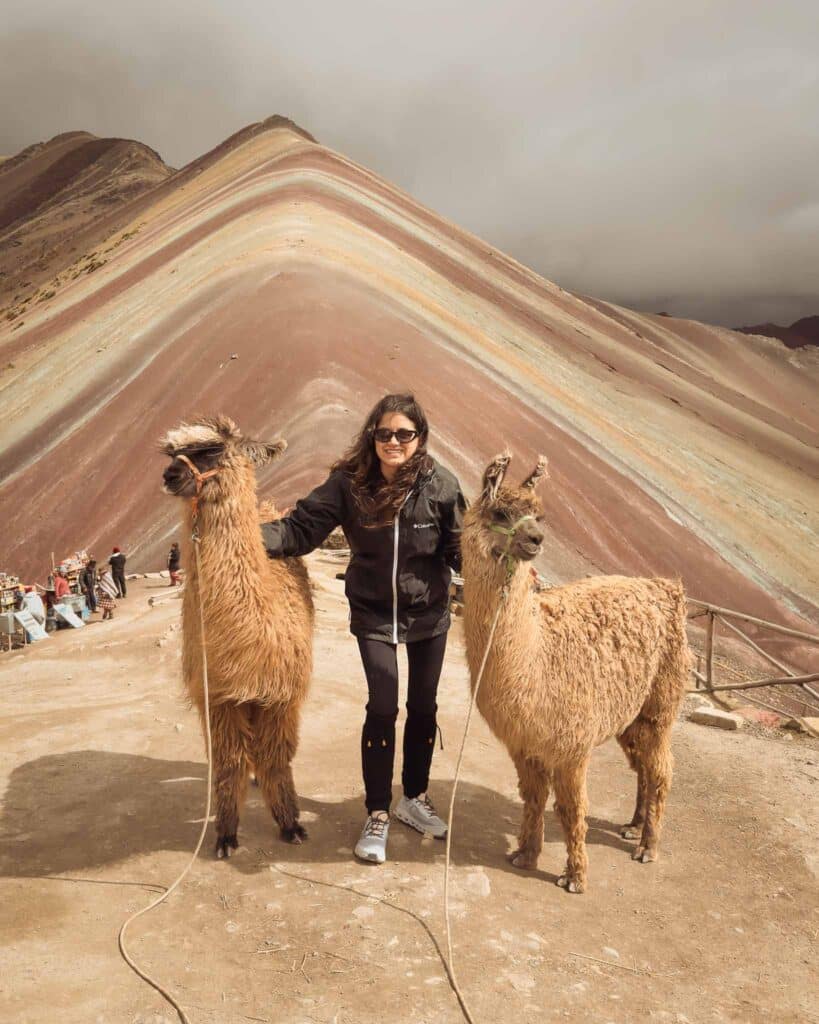
The rainbow-striped mineral ridges of Vinicunca at the top are exactly as surreal in person as every photo suggests. We met llamas, took more photos than necessary, and even got our passports stamped — I got the Machu Picchu stamp — a fun souvenir that costs almost nothing.
Honest caveat: The transport is four hours each way from Cusco. That’s a long day. Go in knowing this and pace yourself.
Altitude note: We bought the famous altitude sickness candy from a vendor at Plaza de Armas in Cusco before the trip — worth picking up before you head out. Acclimatise properly in Cusco for at least a day before attempting high-altitude activities.
👉 Book your ATV Rainbow Mountain tour here!
Day 4: The Scenic Train to Aguas Calientes
Getting to Machu Picchu requires getting to Aguas Calientes first — the small town at the base of the mountain — and the train journey there is genuinely one of the most beautiful rides I’ve taken anywhere.
We took a cab to Ollantaytambo to catch our train. The cabin had panoramic windows including overhead glass panels that let you watch the valley rise around you as the train winds through the Sacred Valley. We ordered chips and chocolate, water was complimentary, and we spent the journey chatting and watching the scenery shift from open valley to dense cloud forest.
On arrival in Aguas Calientes we went directly to the ticket counter to secure our Machu Picchu entry for the following day. This part requires patience — you get a number, wait, and purchase when called. It’s not the most streamlined system but it works, particularly in shoulder season when online tickets had already sold out.
2026 ticket tip: The primary booking platform is tuboleto.cultura.pe — book online as early as possible as daily capacity is limited. If online tickets are sold out, the in-person counter at Aguas Calientes is your backup option as we discovered. Arrive early and get your number first thing.
We explored the town afterwards — local markets, a few souvenir shops, and a quiet evening at Green House Restaurant where I had a lamb dish with pasta and zucchini that was genuinely excellent. My friend had green sauce gnocchi with quinoa. We shared guacamole and chips, had a drink each, and ended with a chocolate brownie and ice cream. The perfect pre-Machu Picchu dinner.
Day 5: Machu Picchu — Circuit 2 With a Private Guide
And then the morning everything changes.
We took the bus from Aguas Calientes up to Machu Picchu — it runs frequently from the town centre and takes about 20-30 minutes on a winding mountain road. At the top, rather than joining a group tour, we had arranged a private guide we found in town the day before. He met us at the entrance, navigated us through the entry lines, and led us through the full Circuit 2.
This decision made the entire experience.
Circuit 2 is the classic Machu Picchu route — the one that takes you to the Guardian’s House viewpoint for the postcard panorama of the citadel with Huayna Picchu mountain behind it. Our guide walked us through the full circuit, explaining the history and geography of each section with a level of detail and passion that a group tour simply can’t replicate. He pointed out birds native to the region, shared stories about Inca construction methods, and yes — helped us pose for photos, some of which were genuinely hilarious.
The three-hour circuit felt immersive rather than exhausting. Machu Picchu is one of those rare places that actually exceeds its own reputation in person.
👉 If you are looking for the safest guaranteed option. Book your Machu Picchu with Guide tour here!
Important 2026 logistics:
- Machu Picchu operates a strict one-way circuit system — backtracking is not permitted (Read about the new circuit system in my Machu Picchu Guide)
- Entry times are enforced with a narrow tolerance window — arrive on or before your ticketed time
- A guide is not strictly mandatory but strongly recommended for Circuit 2 to navigate the one-way paths and understand what you’re actually looking at
- Book tickets as early as possible at tuboleto.cultura.pe
After the circuit we came back down to Aguas Calientes for lunch at Inka Wasi — avocado with Russian salad and quinoa stir fry, shared between us, while a man played pan flute nearby. It was the kind of lunch that feels like it was designed specifically for that moment.
Read More from Peru!
Day 6: Exploring Cusco — San Blas & Hidden Spots
Cusco deserves more time than most Peru itineraries give it — and this day was a genuine highlight.
We started at Cappuccino Café overlooking Plaza de Armas. The café has these charming mini window patio tables right on the edge — you’re essentially sitting outdoors, watching the square below while local music drifted up from a street performance happening in the distance. I had avocado toast with chicken. My friend had a caprese sandwich. We shared fresh juices and a chia seed pudding and sat there far too long, which felt entirely appropriate.
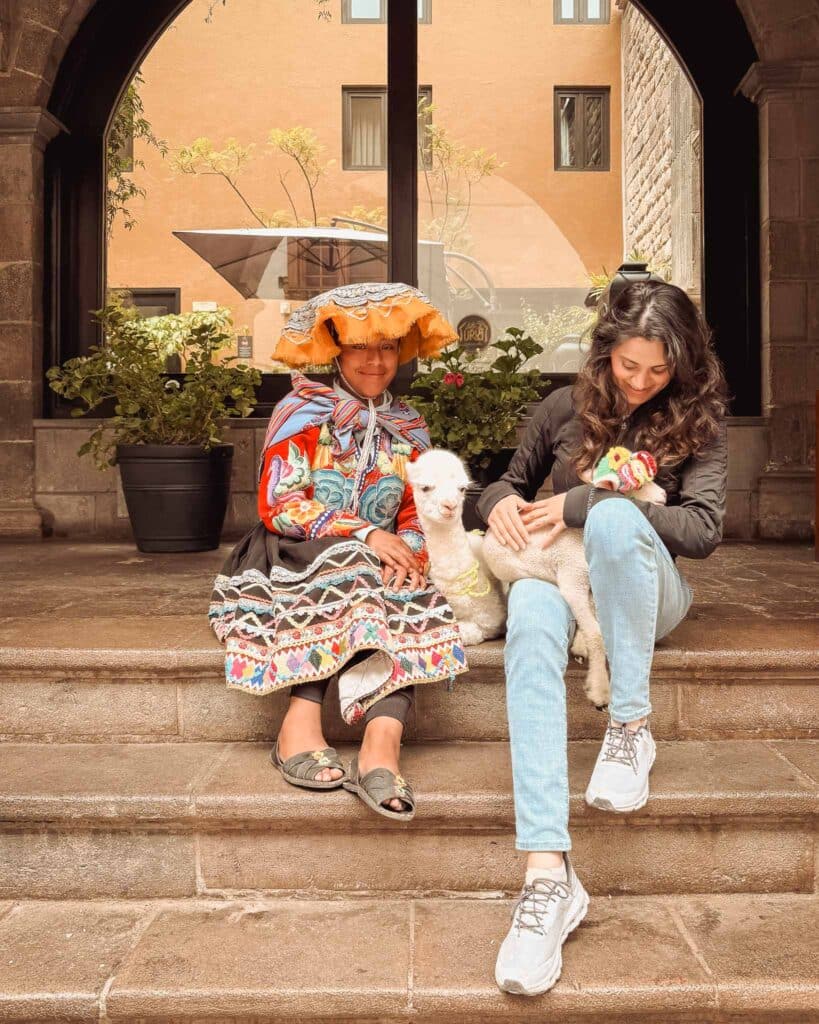
After breakfast we wandered — which is genuinely the best way to experience Cusco’s San Blas neighbourhood. The streets here are cobblestoned, narrow, and full of unexpected moments. We stopped to meet a llama that a local woman had with her — she let me hold it and get photos. I am not ashamed of how excited I was about this.
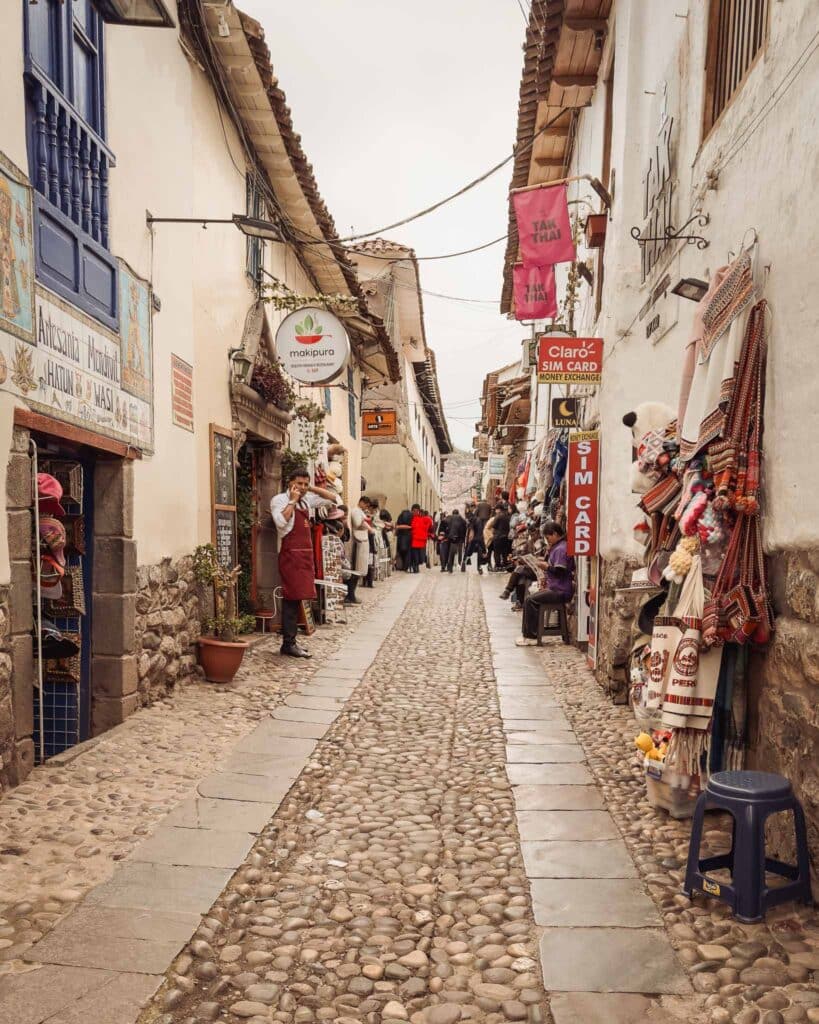
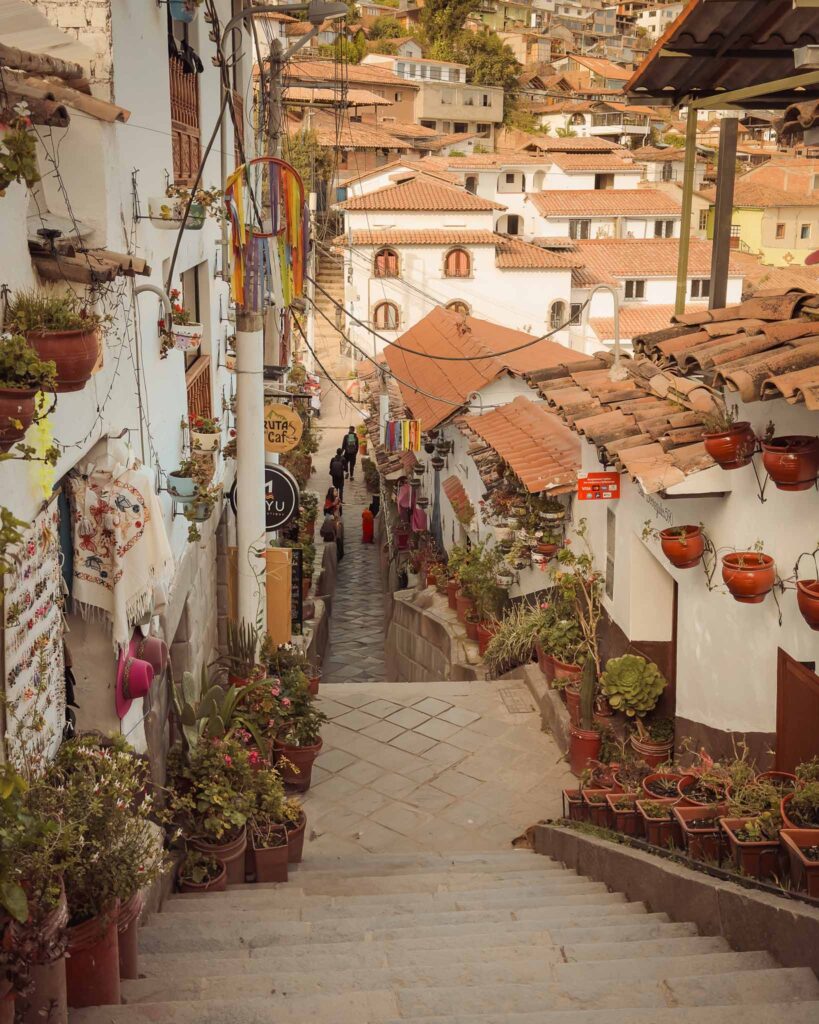
The Instagram-worthy spots in San Blas worth finding:
- Calle Siete Borreguitos — a beautifully painted alley, deservedly famous
- Mirador Siete Borreguitos — just at the base, great views
- Sapantiana Aqueduct (Huaca de Sapantiana) — walk up the stairs past this and continue up the small hill for a panoramic view of Cusco and the Andes that almost nobody else is at. It’s not well listed on maps — search Sapantiana Aqueduct and walk upward from there.
We stopped for coffee at a spot called Local Restaurante — the interiors were cool and the service was lovely but the food and coffee were mediocre. Worth knowing before you go.
The local markets in Cusco are where you should buy your souvenirs — better pricing and better selection than Aguas Calientes. We’d already bought some things in Aguas Calientes and paid more for less. Learn from us.
We ended the evening with Picarones from a street vendor — sweet potato and squash doughnuts soaked in syrup that are lighter and more delicious than they have any right to be. An absolute must-try. We’d have them again the next day given the chance.
👉 If you are looking for a guided photo tour. Book your Cusco Guided Photography tour here!
Day 7: Lima — Beach Day, Markets & Goodbye
Our last day was intentionally unscheduled.
We spent the morning at the Miraflores beach — reading, talking, watching surfers in what is apparently one of the surfing capitals of Peru. The Pacific in March is the perfect temperature to sit beside without necessarily getting in. We watched the sunset from the sand and felt appropriately grateful.
On the walk back we passed the Miraflores market square where an impromptu gathering had formed — older locals dancing to live music in the square on a Saturday afternoon. It was one of the most unexpectedly joyful things I witnessed the whole trip. The kind of scene you can’t plan for and can’t replicate.
We tried chicha morada helada — a cold purple corn drink that is very much a Peruvian staple. Honestly not my personal favourite but better than expected, and a genuine local experience worth having once.
We had Picarones again. Obviously.
That night Pariwana Hostel had a Saturday party — we stayed, made a few new friends, and let the trip end on exactly the right note. We flew home the following morning.
Where to Stay — Pariwana Hostel Lima & Cusco
We stayed at Pariwana Hostel in both Lima and Cusco and it was a consistently excellent choice.
Pariwana is one of Peru’s most well-known hostel brands for good reason. The social atmosphere is genuine — the kind of place where you meet people easily without it feeling forced. The rooftop café in Lima was a highlight from day one. Private rooms are available if you want your own space while still accessing the hostel energy — we booked a private twin room in Lima which worked perfectly for two travelers.
The Saturday night party in Lima was a genuinely fun end to the trip — a reminder that hostels at their best are about community, not just cheap beds.
Good to know: Pariwana books up quickly in shoulder and peak season. Book ahead rather than hoping for walk-in availability.
👉 Book your Pariwana Lima stay here!
👉 Book your Pariwana Cusco stay here!
Practical Peru Travel Tips
Altitude Acclimatisation Cusco sits at 3,400 metres and Rainbow Mountain exceeds 5,000. Give yourself at least one full day in Cusco before attempting high-altitude activities. Buy altitude sickness candy from vendors at Plaza de Armas — it genuinely helps. Drink water constantly and avoid alcohol on your first night at altitude.
Getting Around Taxis are widely available in Lima and Cusco — agree on a price before getting in or use a ride app. For intercity travel, domestic flights between Lima and Cusco are the only sensible option for a 7-day trip. The bus takes 20+ hours.
Machu Picchu Tickets Book through tuboleto.cultura.pe as early as possible — daily visitor numbers are capped and tickets sell out weeks in advance in high season. Shoulder season (March-April, September-October) gives you slightly more flexibility but online tickets still go fast. If sold out online, in-person purchase at the Aguas Calientes ticket counter is possible — get your number early in the day.
Shoulder Season Advantages Traveling in March-April means fewer crowds at key sites, shorter queues, and a more local atmosphere in both Lima and Cusco. Weather in March-April can include some rain particularly in Cusco — pack a light waterproof layer.
Solo Female Safety Lima and Cusco are both manageable and enjoyable for solo female travelers, particularly in the main tourist districts. Miraflores in Lima is safe, well-lit, and walkable. Stay aware as you would in any city. More on this in our dedicated solo female travel Peru guide. (Link when live)
Vegetarian Travelers Peru is surprisingly excellent for vegetarians — quinoa dishes, vegetable stir fries, and fresh salads are on almost every menu. My friend traveled as a vegetarian throughout and ate exceptionally well at every stop.
Read More Travel Articles!
Final Thoughts — Is Peru Worth It?
Without hesitation.
Peru is one of those destinations that delivers at every level — the food, the history, the landscapes, the people, the unexpected moments. Standing at Machu Picchu with a private guide who makes you feel the history of the place. Riding an ATV up a rainbow-striped mountain at 5,000 metres (Watch the experience here!). Eating ceviche alone with a pisco sour and a good book on your first solo afternoon in Lima. Watching strangers dance in a Miraflores square on a Saturday evening.
Seven days feels exactly right for a first visit. Long enough to go deep into what Peru offers. Short enough to leave wanting more.
And you will want more.
Let’s Chat!
Have you been to Peru or is it on your list? Are you a Machu Picchu hiker or would you take the ATV up Rainbow Mountain like us? And did you try Picarones? Drop a comment below — I’d love to hear from you. Save this guide for your trip planning and share it with someone who needs Peru in their life. 🦙
7 Day Peru Itinerary: Your Most Asked Questions (FAQ)
Yes — with smart planning. The key is flying between Lima and Cusco rather than taking the bus, which saves 20+ hours of travel time. Our route covering Lima, Rainbow Mountain, Aguas Calientes, Machu Picchu, and Cusco is the most efficient way to see Peru’s icons in a week without burning out. You’ll leave wanting more, which is honestly the best possible outcome.
Circuit 2 is the gold standard — it takes you through the Guardian’s House viewpoint for the iconic panoramic shot of the citadel with Huayna Picchu behind it. It’s also the most comprehensive circuit for understanding the full layout of the ruins. A private or group guide is strongly recommended for Circuit 2 as the one-way path system doesn’t allow backtracking.
Yes — and I highly recommend it. The ATV takes you most of the way up the mountain, eliminating the majority of the extreme-altitude uphill hike. You still walk the final section to the summit — roughly 5 minutes on foot — which is manageable even for travelers who aren’t experienced hikers. It saved us hours of strenuous hiking at over 5,000 metres and was genuinely one of the most fun experiences of the trip.
No, A guide is not strictly mandatory for entry but is strongly recommended, particularly for Circuit 2. The one-way path system means you cannot backtrack if you get confused, and the historical and cultural context a good guide provides transforms the experience entirely. We hired a private guide in Aguas Calientes the day before and it was one of the best decisions of the trip.
The primary platform is tuboleto.cultura.pe — book as far in advance as possible as daily capacity is strictly limited. If online tickets are sold out, in-person purchase at the Aguas Calientes ticket counter is possible in shoulder season. Get your number at the counter early in the day and be prepared to wait a few hours for your slot. We traveled in March-April and managed to secure tickets in person — this may be harder in peak season so booking a tour is a better option.
Yes — particularly if you want the social hostel experience without sacrificing comfort. Private rooms are available which give you your own space while still accessing the communal areas, rooftop café, and evening events. The Saturday night party in Lima was a genuine highlight of our last evening. Book ahead as it fills up quickly.