My husband and I spent three weeks in Spain in the spring, just before peak summer season. Every pick, verdict and warning in this guide comes from being there.
Three weeks in Spain sounds like a lot of time until you realize how much ground you want to cover.
We booked this trip last minute with one loose plan: start in Madrid, end on the coast, and figure out everything in between. What we got was a capital city with a very good secret bar, a hillside neighborhood in Granada that wasn’t in any of our research, Seville in full festival mode, and five slow days on the Costa Brava that felt like the exhale the whole trip had been building toward.
This is the master itinerary: the route, the highlights and the honest verdicts. City-by-city guides with every restaurant and dish are coming as separate posts, and I’ll link them at the end as they go live.
Spain — At a Glance
📍 Route: Madrid → Granada → Marbella → Seville → Málaga → Barcelona → Costa Brava (Tossa de Mar)
📅 When We Traveled: Spring, just before peak summer
⏱️ Duration: About 3 weeks
🚗 Getting Around: Rental cars for Toledo, Madrid to Seville and Barcelona to Tossa de Mar, a bus from Seville to Málaga, a Vueling flight from Málaga to Barcelona, Uber in the cities
👫 Travel Style: Couple, booked last minute
💰 Budget Level: Mostly mid-range with a few splurges
🏨 Stays: Apartments with balconies in most cities
🎉 Timing Bonus: Feria de Abril in Seville
The Route at a Glance
| Stop | Days | Where We Stayed | How We Got There |
|---|---|---|---|
| Madrid | 4 | Condo near Gran Vía | Flew in from Canada |
| Granada | 2 | Central Granada | Drove from Madrid |
| Marbella | 1 | Bella Mar condo overlooking the ocean | Drove from Granada |
| Seville | 3 | Condo by Plaza San Lorenzo | Drove from Marbella |
| Málaga | 2 | Centro Histórico apartment | Bus from Seville |
| Barcelona | 2, plus a final day | Gothic Quarter | Vueling flight from Málaga |
| Tossa de Mar | 5 | Feel at Home Villa Romana | Rental car from Barcelona |
Table of contents
- Spain — At a Glance
- The Route at a Glance
- Planning Spain Last Minute
- Madrid — Toledo Detours, Balconies and the Best Secret Bar of the Trip
- Granada — The Alhambra We Couldn’t Book and the Neighborhood That Made Up for It
- Marbella — One Day by the Ocean
- Seville — Landing in the Middle of La Feria
- Málaga — The City That Doesn’t Feel Like a Museum
- Barcelona — Gothic Quarter Nights and a Gaudí Day
- Tossa de Mar — The Exhale
- Eating and Drinking Through Spain
- Flying Home
- Our Honest Verdicts
- Practical Spain Travel Tips
- Final Thoughts — Is 3 Weeks in Spain Worth It?
- 3 Week Spain Itinerary: Your Most Asked Questions (FAQ)
Planning Spain Last Minute
We built this trip around a few anchors and left everything else open: Madrid first, the coast last, and a loose line through Andalusia in the middle. It worked, but last-minute planning has a cost, and it’s worth knowing before you copy us. We couldn’t get tickets to the Alhambra, and we couldn’t get inside the Sagrada Família.
Neither dented the trip, because Spain has plenty of free viewpoints and outside views that carry a lot of weight, and I’ll point them out as we go. If either interior is a must-see for you, book as far ahead as you can.
Madrid — Toledo Detours, Balconies and the Best Secret Bar of the Trip
We landed in the morning, but our apartment wasn’t ready until the afternoon. So we picked up a rental car and turned the gap into a half-day in Toledo. We walked the town, climbed up for the hilltop views, had lunch at a Turkish-style restaurant and ended in a tea parlor serving Turkish teas on little settee cushions. Half of Toledo was closed for a local holiday we knew nothing about, which somehow made it feel more like an adventure than a checklist. Then we dropped the car at the airport and took an Uber to our condo near Gran Vía.
The condo had balconies off both the bedroom and the living room, looking down over the square below. European balconies became the running theme of this trip, and I was never once annoyed about it.
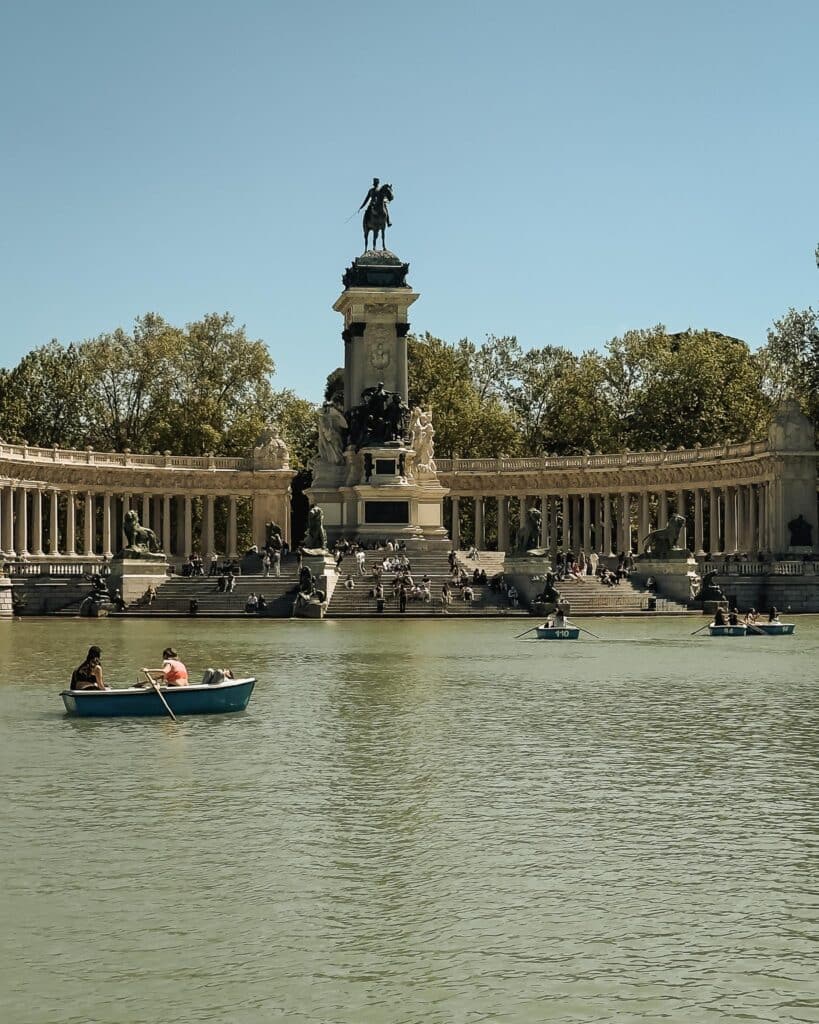
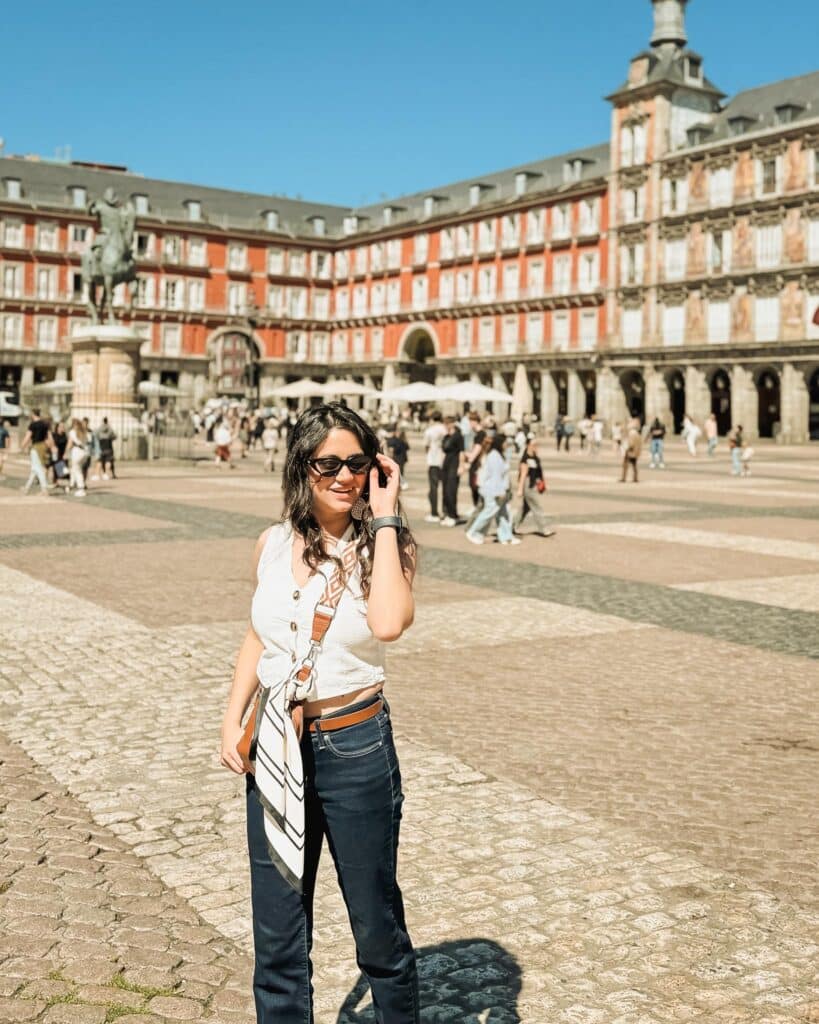
Madrid fills four days easily without much planning. We wandered Sabatini Gardens by Plaza de España, ate our way around Mercado de San Miguel, walked the streets of Malasaña and went up to the Rooftop Gourmet Experience at El Corte Inglés on Gran Vía, which is as much about the view as the food counters. We also spotted a Tim Hortons and a Popeyes, a small piece of home following us around Europe.
The food was a highlight. The late-night seafood and chicken paella at En Busca de Tiempo was delicious, and honestly tastier than the fancier paella we ate later in Málaga. Zenith Brunch & Cocktails did avocado toast and tacos with really good coffee, and Pan y Pepinillos Café served one of the best coffees we had in the city.
Then there’s the bar. The Jack Sparrow hides behind a florist shop called Bonsai. You walk through the flowers and end up in a library-style bar with a whole story behind the concept. It was my favorite speakeasy of the entire trip, and I’m saving the full ranking for its own post.
Granada — The Alhambra We Couldn’t Book and the Neighborhood That Made Up for It
We drove from Madrid and arrived late in the day, which gave us exactly one golden evening to settle in. We wandered around Plaza Bib-Rambla, ate octopus and tapas at El Rincón de Julio, had dipped churros and finished with whiskey sours at Caroca.
The next day was the one we’d been worried about, because we couldn’t get Alhambra tickets. So we walked up to the Sacromonte Caves Museum instead, and it turned out to be one of the best decisions of the trip. The museum shows how people lived in the caves, with textiles, stables and the history of Granada’s Roma community, and right outside is a free viewpoint looking over the Alhambra, with white-and-blue rooftops spread out below it. If you can’t get tickets either, this is your move.
On the way back we stumbled into the Albaicín, which wasn’t in our research at all and became a favorite. It has a Moorish feel, small winding streets and Moroccan-inspired shops and cafés, and it’s the part of Granada that feels like a secret. We stopped at Kashba for Turkish herbal teas and belly dancing, had lunch at Los Manueles in the sunshine and walked through the Alcaicería, Granada’s old silk bazaar. House vermouth became a running theme from here on.
Marbella — One Day by the Ocean
We had one day in Marbella, and we spent it by the water. Our condo, Bella Mar, overlooked the ocean. We had lunch at Mahiki Beach, which was expensive but genuinely good, before some beach time and a gelato from Gion.
In the evening we wandered the old town, with its white-and-blue houses and a little church that happened to be open. A last-minute dinner reservation meant we caught the tail end of a traditional dance performance, and the food was amazing. The new town marina, with its yachts and Dior showrooms, is fun to gawk at.
Seville — Landing in the Middle of La Feria
Seville is where the trip went from great to a little bit magical, mostly because we landed in the middle of La Feria de Abril. We stayed in a small condo by Plaza San Lorenzo and went to the opening ceremony, which was stunning. We spent time at the public casetas, where you can buy drinks, enjoy the music and watch the private tents from the outside. The lights alone were worth it. I’m saving most of my Feria content for closer to next year’s festival, so a full guide is coming.
Beyond the Feria, Seville rewards wandering. We walked through Plaza de España in the afternoon, even more striking with everyone around in traditional dress, and passed horse-drawn carriages near the Archivo General de Indias, extra lively during Feria. In Santa Cruz we found a flamenco dancer performing in the main square, and I’m still not over it.
The Seville Cathedral was our big monument visit of the trip, and it holds its own against the cathedrals we saw in Italy. Go down into the underground section with the sepulchres, and climb the Giralda for the views.
We ate tapas at El Sardinero and right on Plaza San Lorenzo, both great, and picked up pastel de nata from Fábrica de Pastéis de Lisboa, which is Portuguese but worth it anyway. One warning: Casa Belmonte is cheap, has a great view and seats you right in the middle of the street, but we didn’t enjoy our food. Go for the view and eat somewhere else.
Málaga — The City That Doesn’t Feel Like a Museum
We loved Málaga. It’s touristy, but it has a young, fun energy and doesn’t feel like a museum. We took the bus from Seville and stayed in the Centro Histórico in a mini apartment with one of those classic European balconies, and we took far too many photos on it.
We walked past the Roman Theatre just outside the main square, with the Alcazaba fortress rising behind it, and wandered the Puerto area with its small market stalls, down to the beach and the La Malagueta sign. We ate tapas at Kraken, which is highly rated for good reason, and had paella at Tata Negro, right by the cathedral. It was delicious but a little too salty for me. We finished one evening at La Tabernilla, a Moroccan-style spot near the historic square, with chicken, lamb with potatoes and pistachio gelato after.
Barcelona — Gothic Quarter Nights and a Gaudí Day
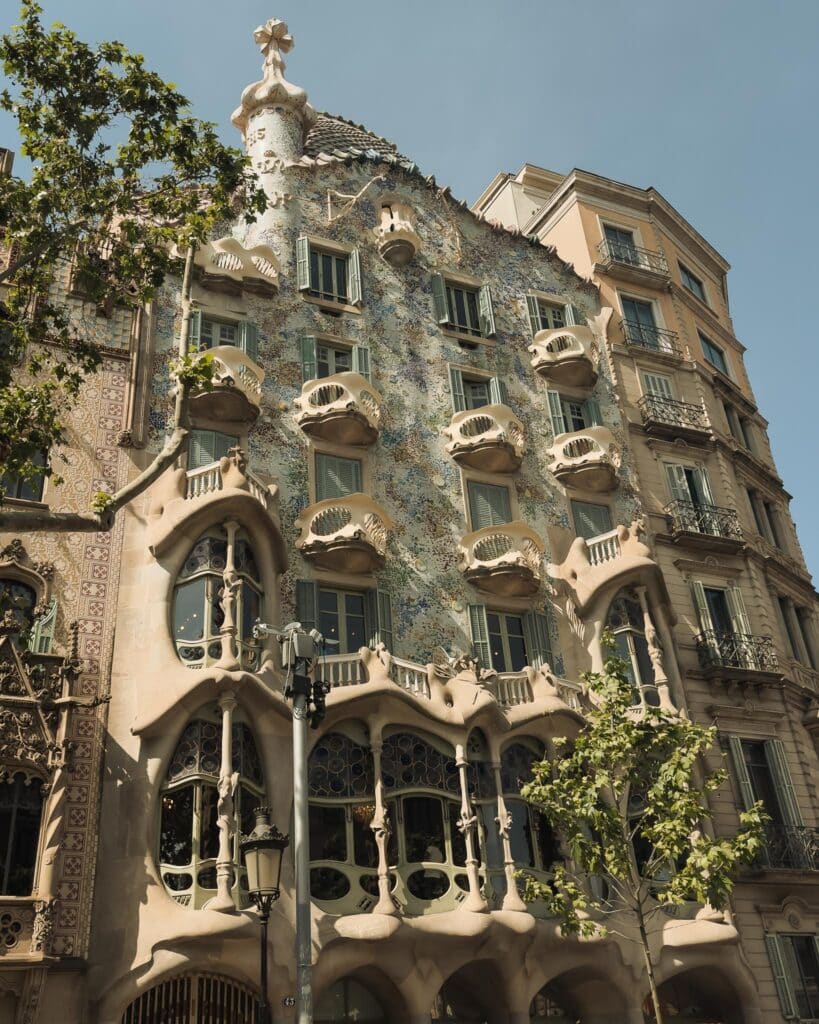
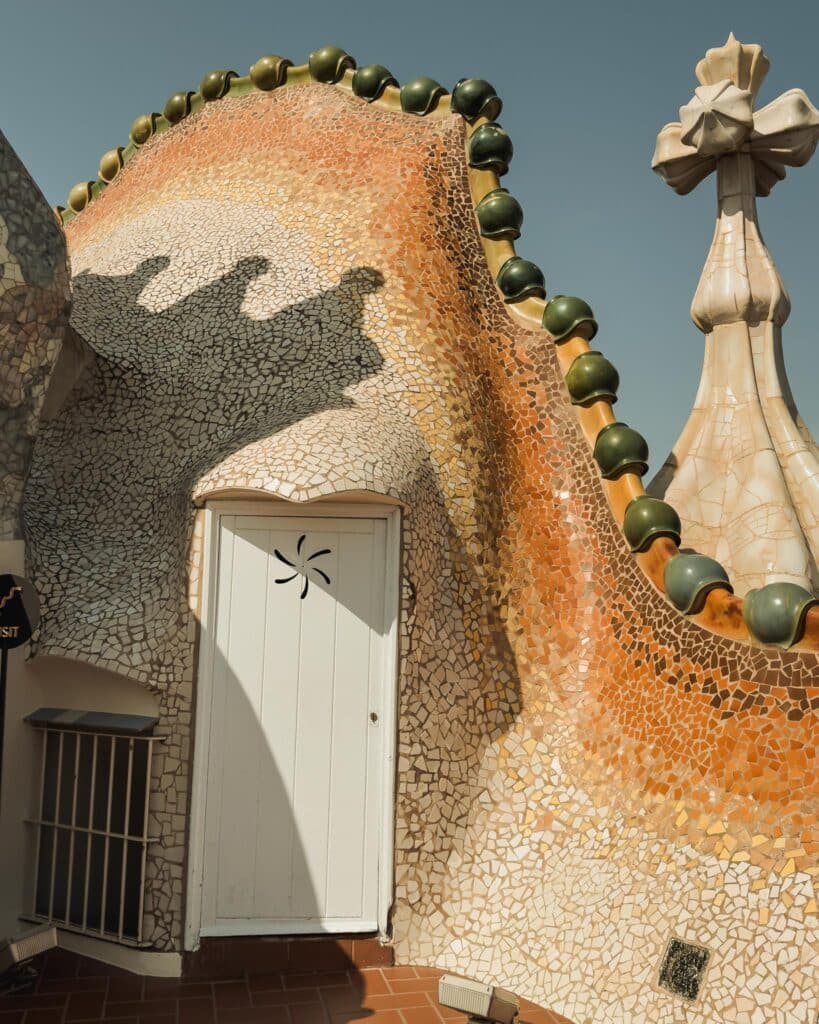
We flew into Barcelona from Málaga with Vueling, which had decent legroom and no complaints, and spent our first night in the Gothic Quarter. It has Hogwarts vibes: old, a little haunted-feeling, and we were obsessed. We walked it at night at every opportunity.
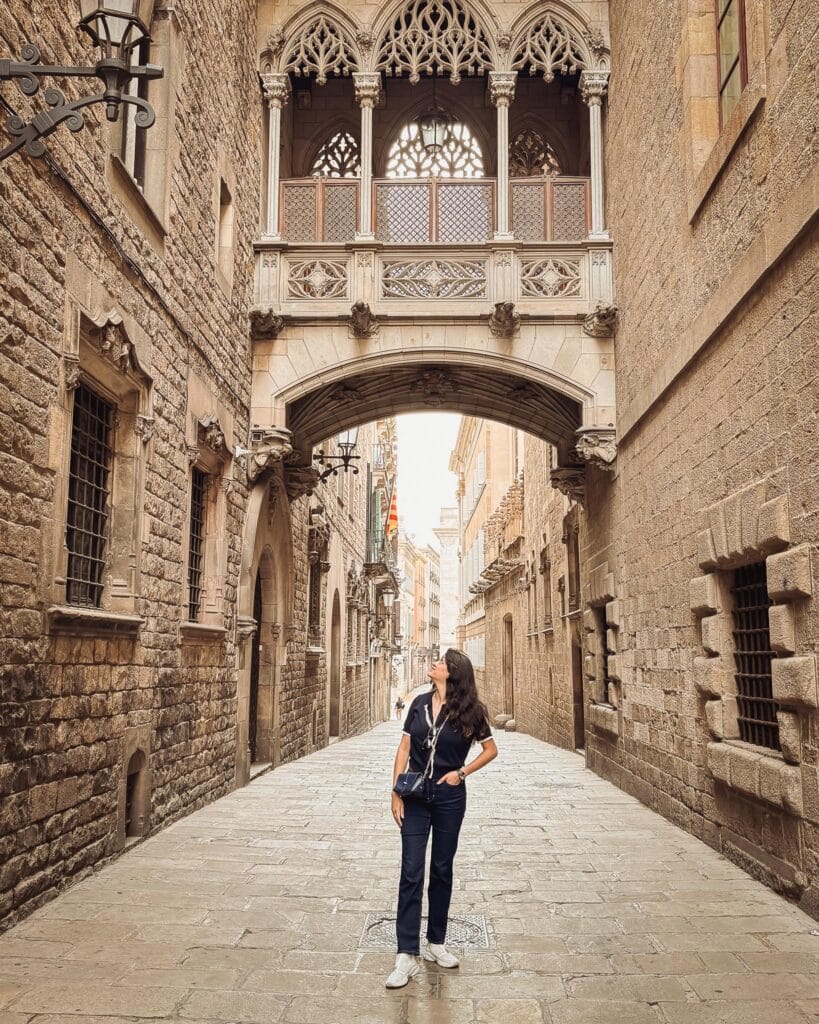
The cathedral looks beautiful lit up after dark, and we went into the prayer area, which doesn’t require a ticket. It’s an active place of worship, so keep your voice down and don’t record, and buy a ticket if you want the full visit. Check current visiting hours before you go. Nearby, Plaça Nova had an orchestra playing and older locals dancing, pure joy, and Plaça de Sant Felip Neri was quiet and lovely. At the Pont del Bisbe, a neo-Gothic bridge built in 1928, look for the skull and dagger underneath, then walk backwards under the bridge while staring at the skull. Legend says your wish comes true.
We also did a Gothic Quarter food tour with unlimited wine. It was slightly pricey, and I’d give the tour itself a 7 out of 10, but the people were a 10: a fellow Canadian, some Americans and a few Europeans. We had house vermut, tapas, pan con tomate with a history lesson, squid paella and wine from a porrón, the glass pitcher you pour straight into your mouth. On the way we passed Plaça Reial, whose lampposts were Gaudí’s first Barcelona commission, which set up our next day nicely.
Our second day was Gaudí day. The line at Casa Batlló was long, so we bought tickets for a 3:15 slot and chose the Gold pass. The Platinum priority pass wasn’t worth it, since even Gold was empty, and the animated experience, the rooftop and the Gaudí Cube were all amazing. Sagrada Família we saw from outside, because we couldn’t get tickets. It’s stunning, but so crowded it was hard to breathe. On our final day back in Barcelona we went to Park Güell, which is a good experience but expensive and out of the city. The Gaudí house museum underwhelmed, and the park is pretty from the outside.
Dinner at Bodega Biarritz 1888 was a surprise set menu at about €45, and the food was amazing. For drinks, Mariposa Negra serves cocktails in the bar’s own pottery, Bobby’s Free hides behind a barber chair with a password that changes monthly, and Paradiso, one of the World’s 50 Best Bars, gets an 8 out of 10 from me for taste and a 10 out of 10 for experience. Go. We also stopped by the flagship Zara, which is gorgeous even if the clothes were just okay.
Read More from Articles!
Tossa de Mar — The Exhale
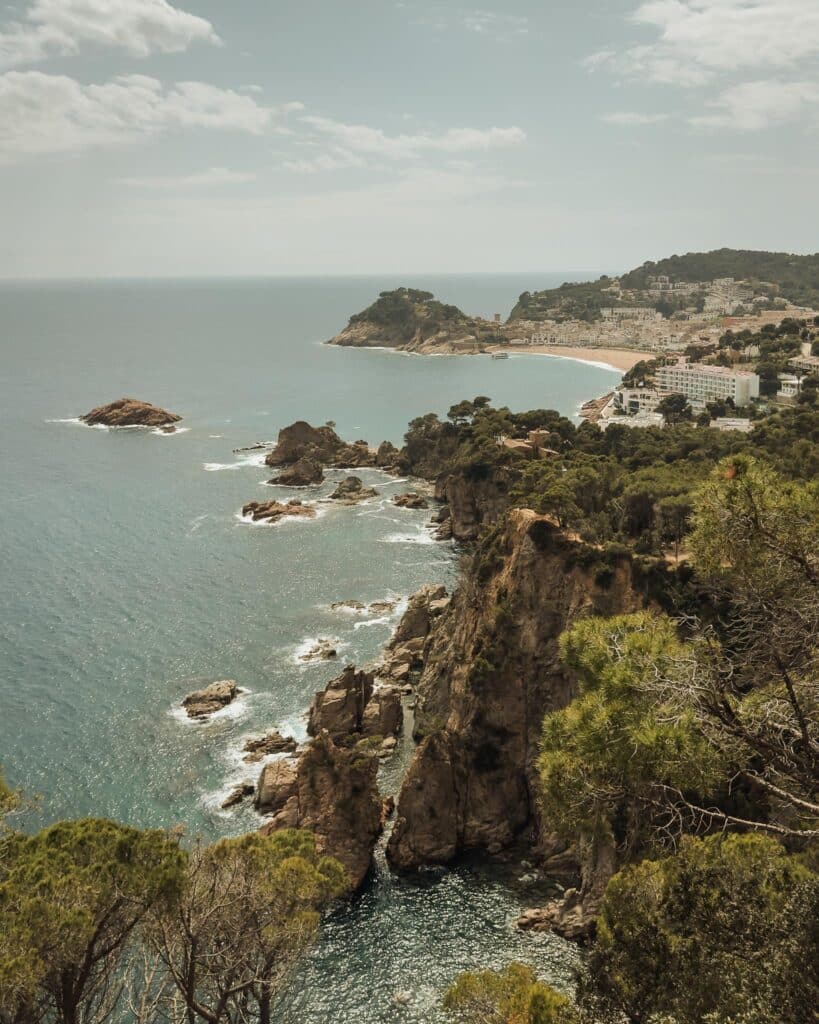
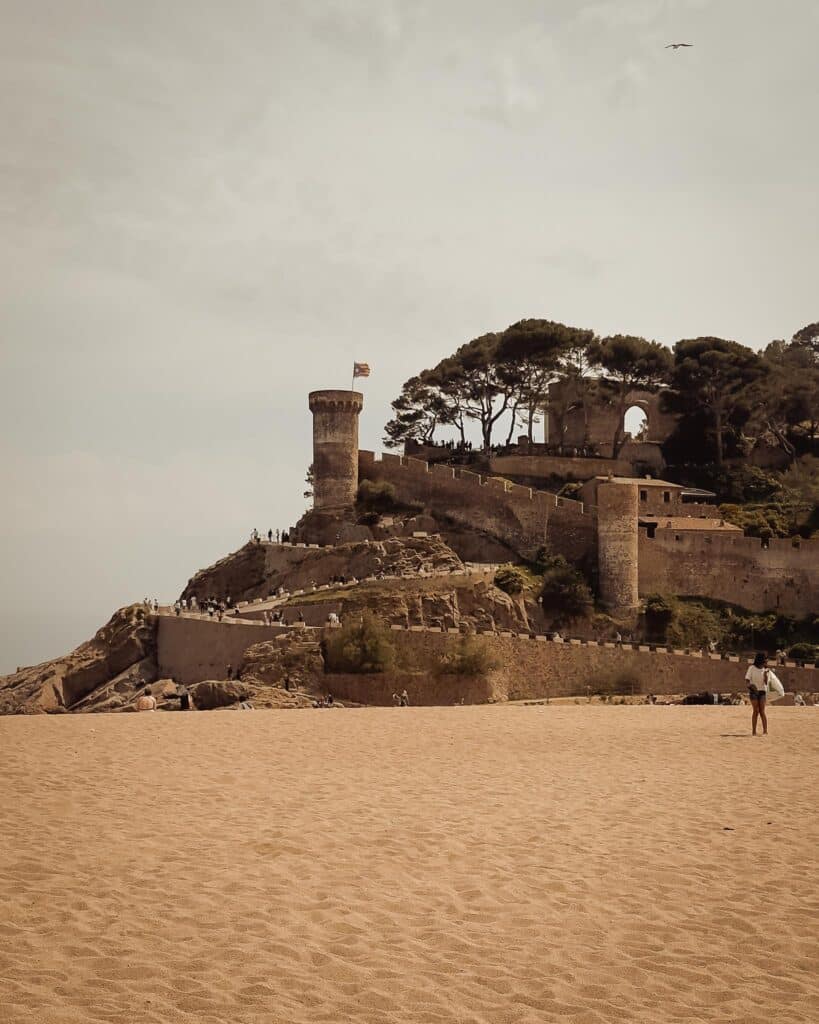
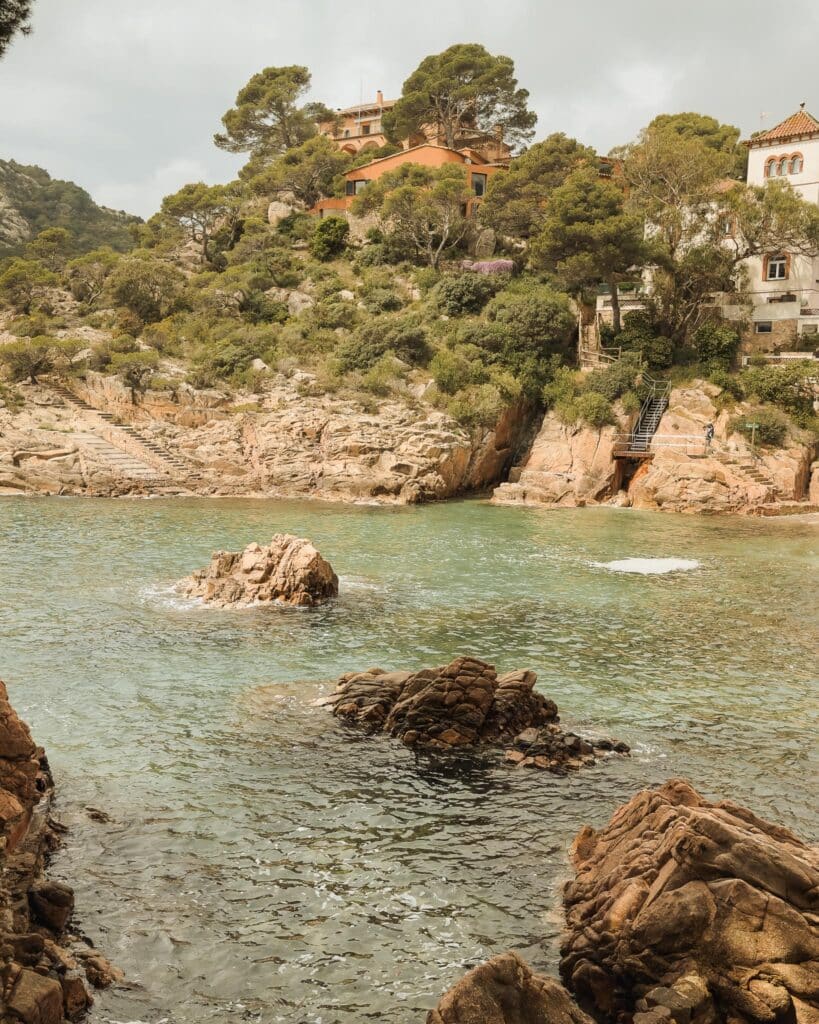
The last stretch of the trip is the one I’d go back for first. We rented a car in Barcelona and drove up to Tossa de Mar on the Costa Brava, where we gave ourselves five slow days. We splurged on one of our highest-tier stays of the trip, Feel at Home Villa Romana, with a huge veranda-style balcony and gorgeous views. After weeks of moving it felt like exhaling.
Tossa’s heart is the Vila Vella, the old walled town. You can see the castle walls from the beaches, and walking up through its alleys with their little shops is pure magic. I kept photographing the castle doors. The beaches are small and each has its own personality, and a hilltop walk gives you views over Plaza Grande with a cute little boat parked up there.
We took a day trip to Begur, which has stunning beaches and cute houses right by the water. It wasn’t sunny the day we went, so pick a sunny day if you can. My husband stayed on after I flew home and saw it again in better weather. Calella de Palafrugell felt very local, with spectacular views. On the drive back from Begur we caught the golden-hour view of Tossa de Mar from the hilltop, and nothing beats that view.
My husband did his Level 1 scuba certification at Mar Menuda beach with Tossa Divers, a serious two-day program that he loved. I skipped the training and lived my best beach life. How he booked it, what it cost and whether it’s worth it are in their own guide (link when live).
On the food side, Bay Leaf, a highly rated Indian restaurant, was exactly what my husband needed. A French restaurant served a creamy butter cabbage dish that is one of the most delicious things I’ve ever eaten (yes, cabbage). Don Juan did a tapas night, and Centre Ibèric Don Juan sold the Ibérico ham we took back for a balcony spread. Logrota was the only place open midday when we arrived, and sometimes that’s the meal.
Eating and Drinking Through Spain
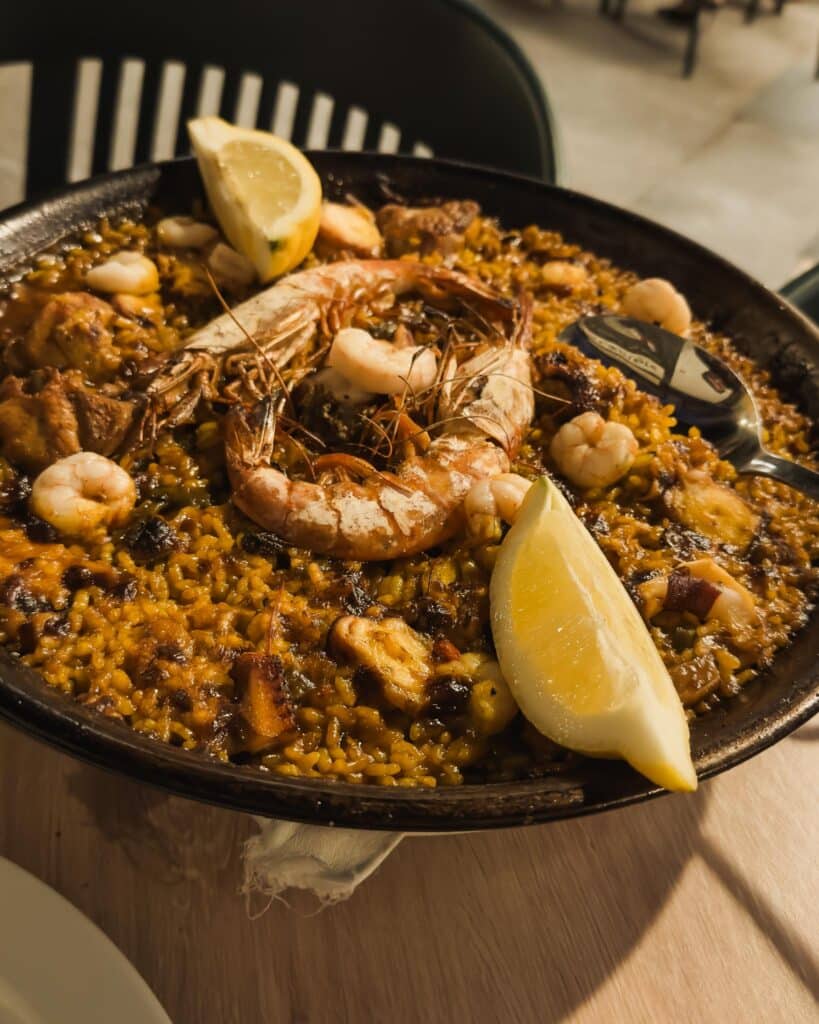
Spain eats in small plates and long evenings, and a few habits followed us through every city. House vermouth showed up in Granada, on the Barcelona food tour and beyond. Pan con tomate came with a history lesson. We had paella in Madrid, Málaga and on the food tour, and the Madrid one won. And churros, pastel de nata and gelato kept sneaking in as dessert. There’s enough here for its own guide, so I’ll keep this short and link it when it’s live.
Flying Home
I flew home from Barcelona the morning after our last Barcelona day, while my husband stayed a few extra days in Tossa, which is the dream. I picked up a few things at duty-free too, and the full Spain haul is coming separately. On the United flight home, the pillows had a split in the middle that converted into neck pillows, and it was the best thing I’d ever seen on a plane.
Our Honest Verdicts
| What | Our Verdict |
|---|---|
| Biggest surprise | The Albaicín in Granada: not in our research, and a favorite |
| Best vibe | Málaga: touristy, but young and fun |
| Best exhale | Tossa de Mar, five slow days |
| Best speakeasy | The Jack Sparrow in Madrid |
| Best-value dinner | Bodega Biarritz 1888, about €45 for the surprise menu |
| Best Gaudí stop | Casa Batlló, Gold pass |
| Go for the view, not the food | Casa Belmonte in Seville |
| Know before you go | Sagrada Família is stunning outside but very crowded. Park Güell is pricey, and the house museum underwhelmed. |
If I did the trip again, I’d book the Alhambra ahead of time and give the south more days. The Albaicín and Málaga are the places I kept thinking about afterwards.
Practical Spain Travel Tips
Entry requirements. As Canadians, we didn’t need a visa for a stay under 90 days in any 180-day period, and your passport must be valid for at least three months after your departure date. US travelers should confirm their own requirements. This was the first trip where the EU’s Entry/Exit System applied to us. It registers non-EU visitors digitally when you arrive, and the EU’s own description includes fingerprints and a facial photo. It rolled out in phases from October 2025 and was due to be fully operational in April 2026, right around when we traveled. A separate pre-travel authorization, ETIAS, has been planned for years, and when I last checked it had no confirmed start date, so verify on the official EU travel website before you book.
SIM card. We bought a Vodafone prepaid SIM (about 270 GB) at the start. A physical SIM was easier than an eSIM for three weeks, and we needed data for work.
Getting around. We rented a car for the Toledo half-day, then again for the drive from Madrid through Granada and Marbella to Seville. From Seville we took a bus to Málaga, flew Vueling from Málaga to Barcelona and rented a third car in Barcelona for the Costa Brava. In the cities we didn’t need one.
Rideshares. Uber worked best for us. Bolt and Cabify are the backups.
Book the big tickets early. We missed the Alhambra and the Sagrada Família interior, and the free viewpoints and outside views carried us. They don’t have to be your only plan.
Read More Articles!
Final Thoughts — Is 3 Weeks in Spain Worth It?
This route gave us a capital, a Moorish hillside, a beach stop, Seville in festival mode, a city with a young energy, Gaudí’s Barcelona and a quiet coastal finale. Spain changed character every few days, and we never got tired of it.
Go for as long as you can. Order the vermouth. Walk the Gothic Quarter at night. Spend your last five days on a balcony in Tossa with Ibérico ham.
Let’s Chat!
Which part of this route would you do first: Andalusia, Barcelona or the coast? And would you book the Alhambra months ahead, or take your chances like we did? Drop a comment below, I’d love to hear. Save this guide for your Spain planning and share it with someone who needs a three-week trip. 🇪🇸
3 Week Spain Itinerary: Your Most Asked Questions (FAQ)
It was enough for seven stops across the center, the south and the northeast, with one deliberately slow stretch at the end in Tossa de Mar. It’s a full route, and some stops, like Marbella, only got a day. It doesn’t include northern Spain, Valencia or the islands.
We went Madrid, Granada, Marbella, Seville, Málaga, Barcelona, then Costa Brava. It gave us big cities, the Andalusian south and a slow coastal finish.
We didn’t take any trains between cities, so I can’t compare. We rented cars for the Toledo half-day, the drive from Madrid to Seville and the Barcelona to Tossa de Mar stretch, took a bus from Seville to Málaga and flew from Málaga to Barcelona. In the cities we walked and used Uber, and we never needed a car there.
That was us. For the Alhambra, walk up to the Sacromonte Caves Museum in Granada, which has a free viewpoint looking over it. For the Sagrada Família, the outside is stunning, though very crowded. We did get Casa Batlló tickets on the spot, so Gaudí is still doable last minute. If either interior is a must-see for you, book as far ahead as you can.
Canadians don’t need a visa for a short stay under 90 days in any 180-day period, and your passport must be valid for at least three months after departure. Check your own country’s requirements, and check the official EU travel site for the Entry/Exit System and ETIAS status before you book.
We went in spring, just before peak summer season, which put us in Seville for Feria de Abril. We haven’t visited in summer, so we can’t compare.